







































Gas prices are often treated as a routine inconvenience, but their fluctuations quietly shape the cost of nearly every good and service in the American economy.
The scope extends far beyond filling up a car, even though transportation costs are one of the most direct ways Americans feel the impact.
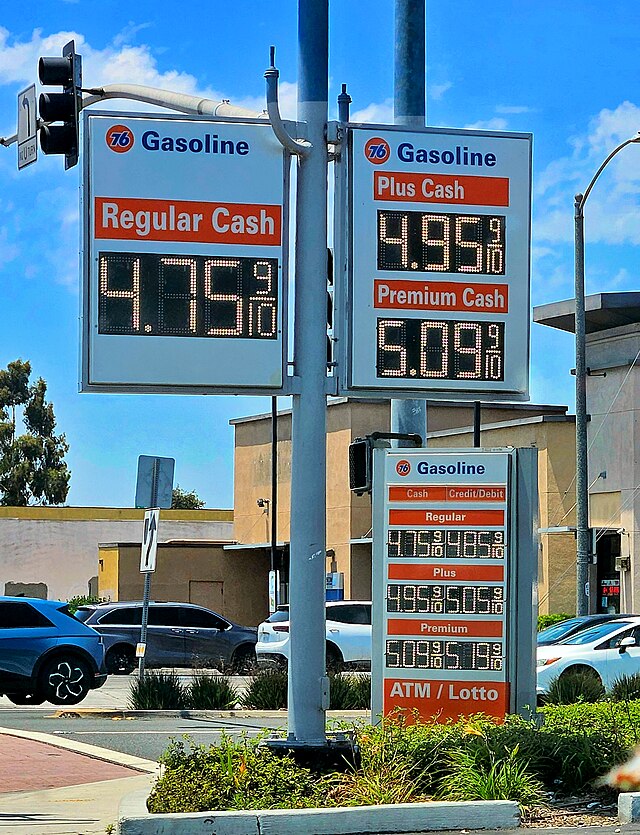
According to Reuters, national gas prices have risen above $4 per gallon, roughly a 30% increase from last year. As a result, daily tasks such as driving to school, work or the grocery store become increasingly expensive.
Over time, even small increases can add up to hundreds of dollars spent just to fill a gas tank. For the average consumer, the effects do not end there.
Higher gas prices also raise transportation costs for goods sold in stores and supermarkets.
Because retailers are often unwilling to absorb higher distribution costs and face tighter profit margins, they pass those costs on to consumers, contributing to inflation.
Although gasoline is highly visible in a car-centered society, it accounts for about 4% of the cost of all goods and services measured by the Consumer Price Index, or CPI, according to the Federal Reserve.
That means rising gas prices contribute to overall inflation, though on a smaller scale.
The CPI has risen by roughly 1% due to higher gas prices.
While this may seem minor, the impact is significant for financially insecure households. As prices rise, people are less able to afford the same goods and services, reducing their purchasing power. Inflation acts like an additional tax, leaving households with less disposable income and a reduced ability to spend or invest.
According to The New York Times, “inflation is complicating American lives.”
Even a 1% increase in effective costs can have a broad economic impact.
According to the Tax Foundation, it is equivalent to reducing Americans’ total income by about 1%, or roughly $310 billion in aggregate income, a key component of GDP.
Ultimately, the price of gasoline plays a larger role in everyday life than many realize. It influences transportation costs, consumer spending and national inflation.
Recent data underscores the scale of these changes. According to The Guardian, national gas prices have climbed above $4 per gallon, representing roughly a 30% increase from the previous year.
This surge directly affects daily life. Routine activities like driving to work, taking children to school, or making a trip to the grocery store become more expensive.
Over time, even modest increases add up to a substantial financial burden.
A few extra dollars per fill-up may not seem significant in isolation, but over weeks and months, households can end up spending hundreds more just to maintain their normal routines.
For families already on tight budgets, these rising costs can force difficult trade-offs between essential needs.