














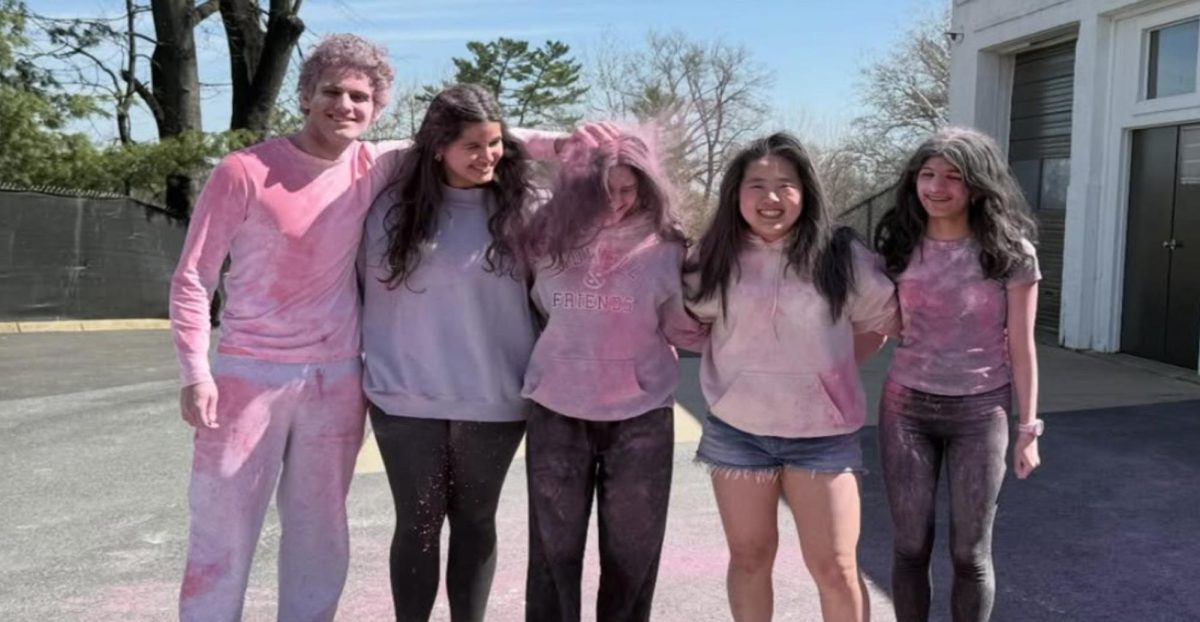













Sidwell’s Asian Student Affinity (ASA) hosted its annual Holi celebration on March 20, inviting Upper School students and faculty to gather in the courtyard and throw colored powder at one another.
Holi, known as the “festival of colors,” is celebrated on the last full moon of the Hindu month of Phalguna and typically falls in late February or March. This year, Holi began on Tuesday, March 3rd and continued through Wednesday, March 4th, according to History.com. The holiday marks the end of winter, the arrival of spring and the triumph of good over evil.
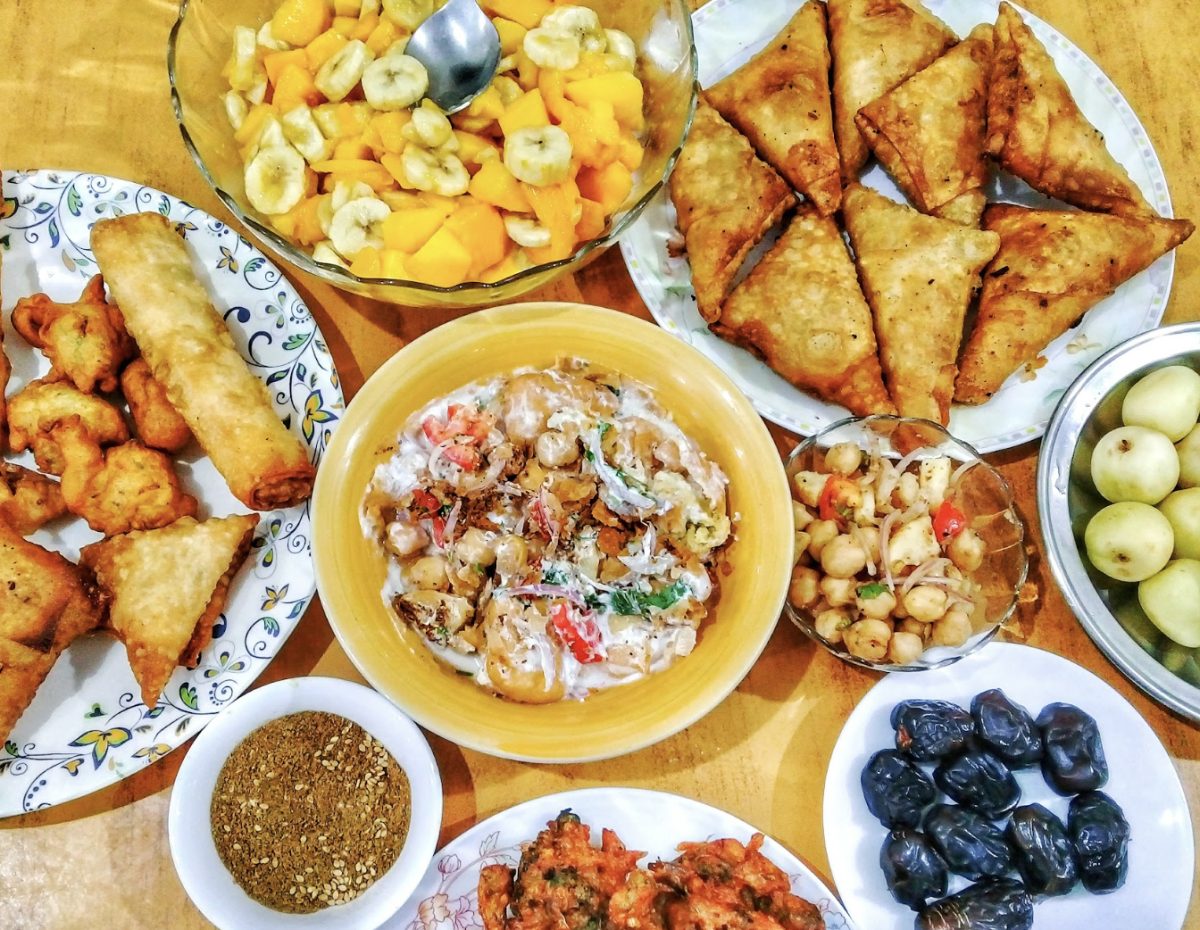
“Holi is a wonderful celebration, and it was really nice to celebrate it at Sidwell. Although many people were traveling right after leaving school, some still participated, including a middle schooler, who spoke to how the celebration is meant for all ages. Some faculty also participated and the food was great,” said sophomore ASA member Neyla Marwah.
While Holi is often associated with the throwing of colored powder, the celebration is traditionally split into two parts. The first, Holika Dahan, involves lighting bonfires to symbolize the destruction of evil. It is believed to be a tradition that tells us all the bad qualities in the world will be destroyed by good ones. This meaning stems from the mythological story of Holika and Prahland, which has been passed down through the Hindu community.
According to this legend, there was an evil king named Hiranyakashyap once upon a time who demanded total worship from his subjects. However, his son, Prahlad, refused to submit to his father’s tyranny. Angered by this, Hiranyakashyap asked his sister, Holika, who possessed a magic cloak that made her immune to fire. Holika’s plan was to lure Prahlad into sitting on a huge pile of fire, intending to burn him down while she sat protected by her cloak. However, the plan backfired through a divine reversal: the cloak that was supposed to protect Holika landed on Prahlad instead, leading to Prahlad’s survival while Holika perished in the flames. That is why today, bonfires are lit on Holika Dahan to commemorate this victory of righteousness over evil, according to the Week News Desk. Once the bonfires have gone out, some Hindus even smear the ashes on their bodies as part of a purifying ritual, according to Interfaith America.
The following day, Rangwali Holi, centers on color and community, inspired by the story of Radha and Krishna and representing joy, love and renewal. Today, the use of vibrant powers not only commemorates their love story, but also aligns with the arrival of spring – the season of blooming flowers, bright colors and emerging light, according to Religion News. Rangwali Holi, which translates to “Colourful Holi,” is the heart of the Holi festival and its most globally recognized tradition.
At Sidwell, ASA focused on Rangwali Holi, creating a space where students could participate in the celebration regardless of their familiarity with its origins.
“I love how students who were just passing by our Holi stand decided to join in,” sophomore ASA Co-head Nora Chang said. “Even if they didn’t fully understand the tradition, they were laughing and having fun with each other, which was the most important part to see.”
Sophomore ASA member Neyla Marwah also emphasized the event’s inclusivity.
“It was really nice to celebrate it at Sidwell,” she said. “Even though many people were traveling right after school, some still participated, including students from other divisions and faculty.”
Beyond its festive atmosphere, Holi carries a deeper meaning centered on renewal and connection. The holiday encourages people to let go of past grievances, embrace positivity and strengthen relationships. These themes were reflected in the Sidwell celebration, where students from different backgrounds came together.
For many, the event also offered an opportunity to learn more about South Asian culture. While Holi has gained popularity around the world, its cultural and religious significance is not always fully understood. ASA’s celebration helped bridge that gap by combining education with participation.
Senior ASA Co-head Sophie Cao highlighted the sense of unity the event created.
“It was lovely to see so many people together having fun, enjoying the color powder and the food,” she said. “It unified the community right before we all separated for spring break.”
Held just before spring break, the event served as a release after a long academic stretch, Cao added. Students were able to step away from their routines and reconnect with one another in a relaxed environment.
Overall, the Holi celebration served as both a cultural and community-building event. By inviting all students to participate, ASA fostered a sense of inclusivity while also highlighting the importance of understanding traditions beyond one’s own.