
































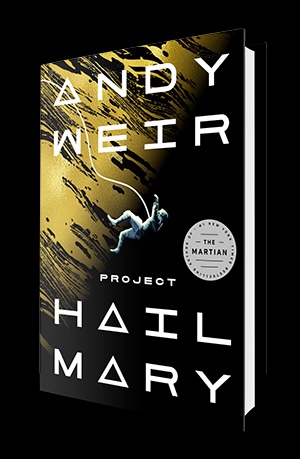
“Project Hail Mary,” starring Ryan Gosling and directed by Phil Lord and Chris Miller, premiered on March 20, captivating audiences. An adaptation of the novel by Andy Weir, the film became a massive critical and commercial success, grossing over $500 million globally, according to Variety, and becoming Amazon MGM’s highest-grossing film of all time.
The film follows Dr. Ryland Grace, a middle school science teacher who wakes up on a spaceship with no recollection of who he is and how he got there. As his memory returns, Grace discovers he has been sent on a suicide mission to uncover the mystery of the substance that is dimming the sun and to ultimately save humanity. Though he begins as the only survivor on the ship, he meets Rocky, a comical and endearing alien from the planet Erid who is on the same mission.
“Project Hail Mary” is a delightful combination of buddy comedy and science fiction, but it remains poignant in Gosling’s portrayal of a man who learns to be brave for the sake of the world.
A notably mesmerizing scene from “Project Hail Mary” occurs when Grace and Rocky reach the planet Tau Ceti E and find themselves surrounded by astrophage, organisms that feed on stars. The film takes a moment to reveal the astrophage, illuminated in luminous red and pink, the cells appearing as little balls of light, with Grace in his space-suit floating in the middle of it all, reveling in its beauty with the audience.
The scene was not made with CGI but instead with physical LED lights. “Project Hail Mary” filmmakers, including cinematographer Greig Fraser, were adamant about not using green screens, a decision that ultimately worked in their favor, as audiences praised the film’s colorful and intricate scenes.
An X user, @chaoticmulaney, noted that they are “genuinely sad” for the people who watch the movie at home after the digital release. “This is exactly the kind of movie you [need] to experience in a movie theater.”
Audiences additionally appreciated how “Project Hail Mary” refused to indulge in pessimism, instead asserting that human beings — and aliens, too — are capable of coming together to solve the necessary technical problems.
Another X user, @silqco, posted that they love “Project Hail Mary” and other movies “about friendship and soulmates and connecting with someone and them ending up being so important that you’ll try to give them everything.”
Sandra Huller, who stars as the pragmatic task force leader Eva Stratt, agreed with these sentiments, telling Discussing Film that “Project Hail Mary” is “a beautiful story about all creatures working together in order to save their planets, and to inform each other about what it is to live… it is something we actually need today.”
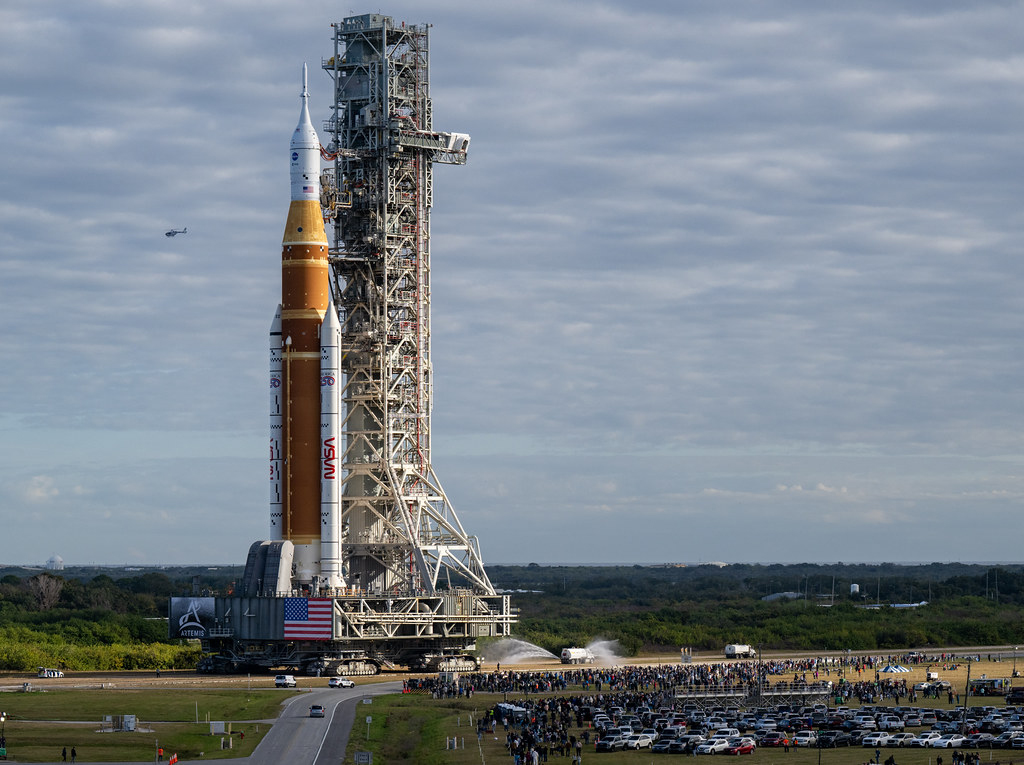
Though Gosling’s star power was undeniably a draw for the “Project Hail Mary,” the film also owes its success to word-of-mouth, creative marketing strategies and NASA’s launch of Artemis II.
The film benefitted from a wide audience, ranging from fans of the book or science fiction in general to Gen Z, Millennials and older generations who appreciate the classic art of going to the movie theater.
However, Gen Z seems to be the most significant demographic driving the movie’s popularity. A recent Fandango study found that Gen Z is now the most active cinema-going demographic, attending more films annually than its elders. Members of Gen Z are also spending more on premium-format screens like IMAX, for which “Project Hail Mary” is formatted and to which it owes about 20 percent of its revenue.
“While there has been a perception that Gen-Z is less engaged with theatrical moviegoing, our data shows that their momentum has been building,” Jerramy Hainline, executive VP at Fandango, said, according to Variety. “What’s especially notable is how strongly they value the shared, communal aspect of the experience, reinforcing that theaters continue to play an important role as a social destination for younger audiences.”
Although the rise of streaming has many cinephiles worried about the future of theaters, a topic Gosling addressed in remarks to a New York audience on opening night.
“It’s not your job to keep [theaters] open,” Gosling said, according to Variety. “It’s our job to make [movies] that make it worth you coming out.”