

























On March 7, the Parents of Students of Middle Eastern, Islamic and North African Heritage collaborated with the Sidwell Muslim Students Association to host Sidwell’s annual Ramadan Iftar. Over 40 Sidwell families, students and staff enjoyed an evening of community, reflection, charity and hope. Yasmine Elhady, an attorney, comedian and host of the Hulu show Muslim Matchmaker, spoke at the event.
Ramadan, the ninth month of the Islamic calendar, is the month during which Muslims believe the Quran was revealed to Muhammad. It is observed by Muslims worldwide as a month of fasting, prayer and reflection. Iftar, Muslims’ breaking of their fast at sunset, is often a time where families and communities come together. About 1.9 billion Muslims worldwide observe Ramadan each year.
Charity is a major part of Ramadan, and more broadly, of Islam itself. Sidwell families and students were invited to donate to A Wider Circle, a nonprofit organization in Washington dedicated to helping families experiencing poverty.
Born in Egypt, Elhady came to the United States as a refugee at the age of five, growing up in Alabama. After distinguished careers as a human rights lawyer and professional matchmaker, she pursued her passion for comedy, building an international stand-up career. She joined the Sidwell community to share reflections, humor and insight into her life as a Muslim in America and her Islamic values.
Elhady has spoken about the importance of embracing identity. “As a Muslim woman, you should never have to feel that your religion or identity has to be checked at the door,” she said in an interview with the American Muslim Women Magazine.
Growing up in the south, Elhady often felt alienated. “I learned very quickly that I was not one of them,” Elhady told the American Muslim Women Magazine. “Again, I felt like the other. I felt like this was not home. I felt very much loved and seen, but not felt and understood.”
After casually experimenting with open-mic comedy, Elhady developed a passion for making others laugh while communicating critical messages. “My hope is that comedy will make you stop and think about it after it’s done,” she said for the American Muslim Women Magazine. “I think the biggest skill that you can have is really making people think about what you said long after you said it.”
Sophomore Ayah Ilyas mentioned that her favorite part of Elhady’s speech was hearing “the story of her standing up to a bully who had made fun of her hijab and another girl for her Jewish identity. It really inspired me to also show bravery in a similar way.”
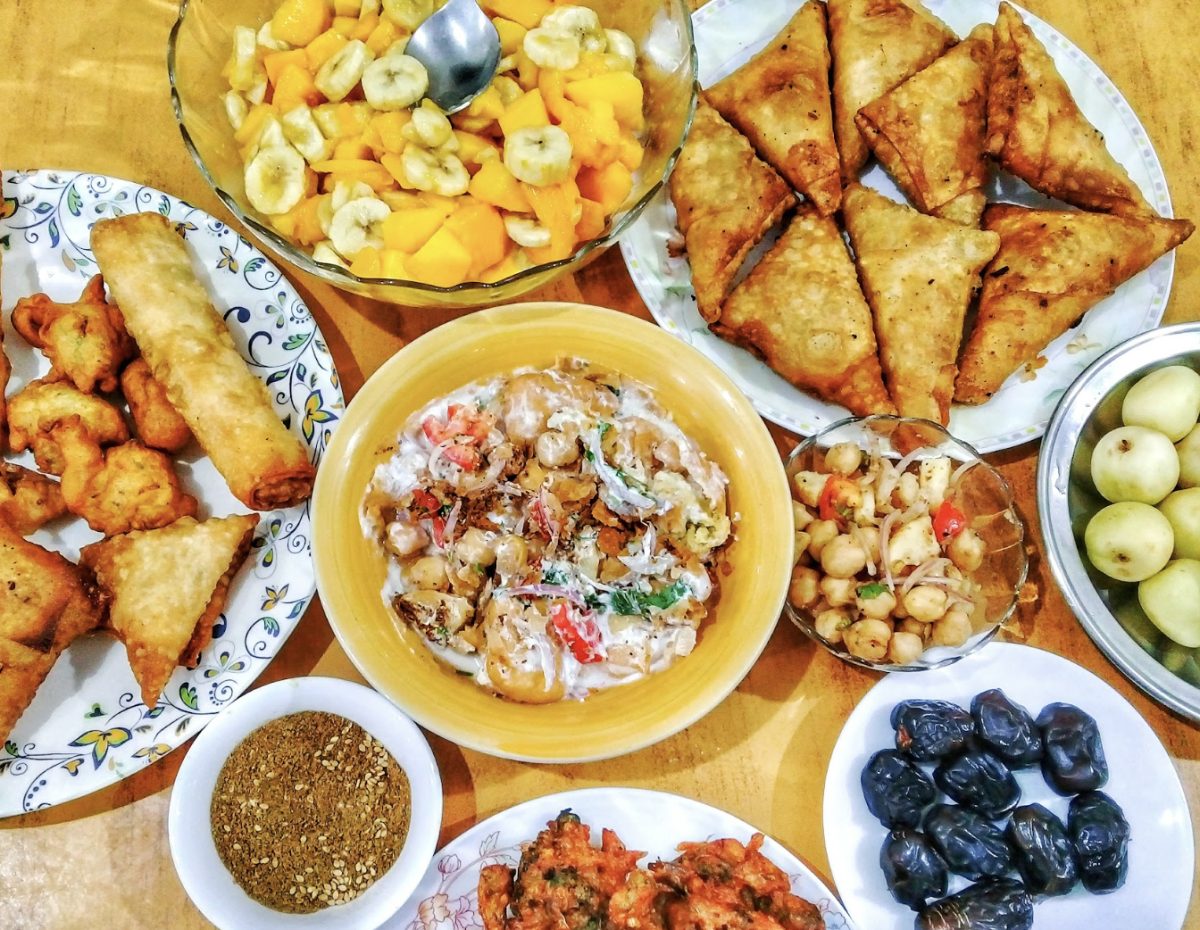
Additionally, one Sidwell parent helped to recite the Adhan — the Islamic call to prayer — for the evening prayer, Maghrib, a first at a Sidwell Iftar. His recitation signaled that it was time for those fasting to break their fast with a dinner served potluck-style. Families brought food from different parts of the world, including South Asia, Levantine, North Africa and Turkey, to the Iftar.