






























With thirty minutes to the beginning of the Feb. 21 event at Politics and Prose commemorating The Washington Post’s Book World section, the bookstore was packed.
All seats on the main floor were taken, and people filled the stacks, peeping over bookshelves to watch the former Post critics and editors speak. Staff members directed visitors to overflow seating downstairs.
Many attendees said they had come to the event out of love for the section, which was eliminated when the paper laid off 370 employees on Feb. 4.
“You can’t measure the Book World in dollars and cents,” said Helen Gonzales, a former AFL-CIO employee, in an interview with Horizon. “It’s really sad to lose that sense that you’re tied in with people who care about things. That’s what gets torn apart when people who are in power start breaking bonds.” Gonzales further expressed concern for the remaining Post writers “still trying to do the work of democracy through their coverage.”
“I loved Book World,” said Natalie Zanin, who teaches adults with disabilities, in an interview with Horizon. “That was the highlight of my week. Just insightful commentary, insightful reviews… It clued me into things that I wouldn’t normally have looked for”
“It’s so different than an algorithm,” she added. “Book World suggested books to me that made me stretch in my reading, just made me look at things and say, ‘Hey, I’m going to give this a try.’”
After both floors of the bookstore filled up, the event began.
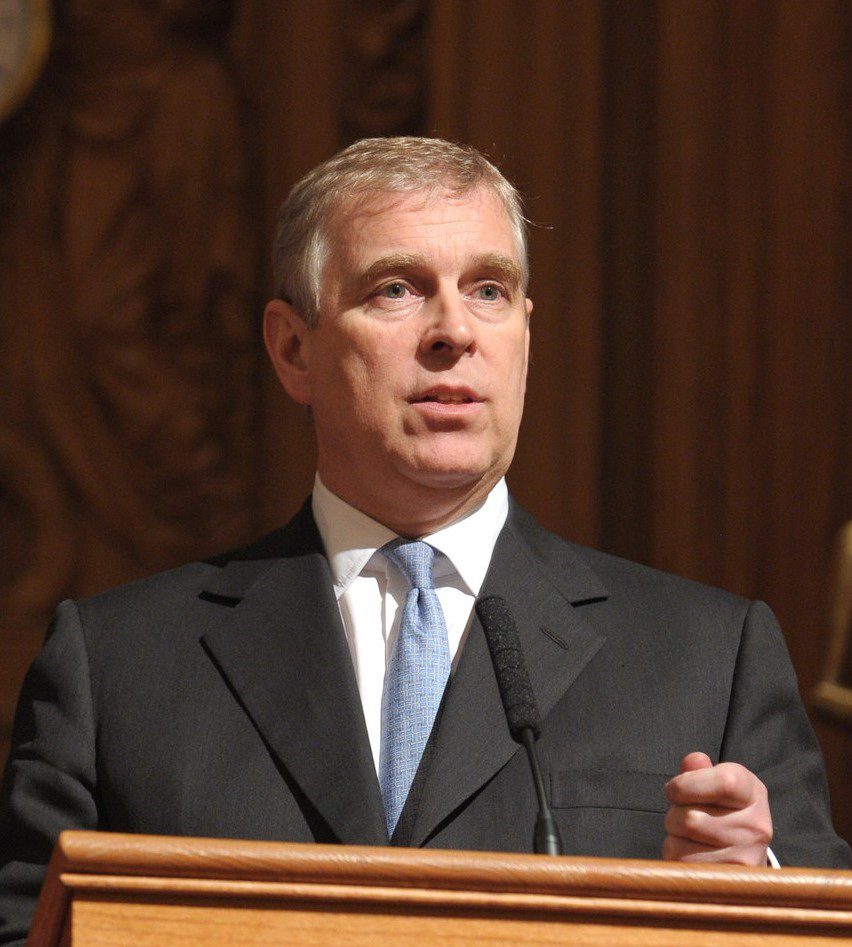
“It’s moments like this that I wish the store could be much bigger, but hopefully all of you are taking some comfort in seeing just how many of you are here… gathered to mourn the recent decimation of The Washington Post and to honor in particular the memory of the Book World section,” Bradley Graham, the owner of Politics and Prose and a former staff writer at The Post, said.
He noted that the layoffs, which he termed “heartbreaking” and “infuriating,” “leave a cultural void.”
After Graham spoke, he gave the floor to several former Book World editors and critics, including critic Ron Charles and poet Rita Dove. Each shared recollections of and reflections on the section’s unique place in American literary criticism.
Marie Arana, who joined Book World as its Deputy Editor in 1993 and served as its Editor-in-Chief from 1999 to 2009, began her “tribute to a vanished gem” by addressing “friends, colleagues, writers and readers.”
“As I stand here absorbing Book World’s absence… I feel a profound sense of loss and no little rage,” Arana said. “Though the readership in this country has never been greater, these last few years have proved to be a trying time for book culture. We find ourselves battling book bans, the trivialization of truth, the bashing of serious journalism, the full-on attacks on the academy and now The Washington Post, once one of the most respected journalistic institutions in America, is enduring a mass demolition like no other.”
She eulogized the review as a “nationally renowned, vibrant tribute to American culture often hailed as the most intelligent, provocative and entertaining” book review, a “rebuke” to the idea that “the capital of the US is a cultural desert.”
Describing her arrival at Book World, a “dream job,” Arana recalled being “humbled by the erudition and wit around [her]” as she led “a staff that [she] was very sure was much smarter than [she] was,” praising their “deep understanding of what it means to have a literary sensibility.” Amid this “formidable cavalcade of smarts,” Arana said, she brought “dedication, curiosity, and a healthy dose of humility” to her work.
When she arrived at The Washington Post, Arana said, “the legendary Katharine Graham” – the paper’s former publisher – told her that “a major newspaper needs a flagship book section… A paper without one is like a ship without a compass.”
Now The Post was without one.
“The loss of Book World is not just part of the general loss of book review sections” occurring across the United States, said Carlos Lozada, currently a New York Times Opinion columnist, who had previously served as Book World’s nonfiction critic. “There’s also something very distinctive, very unique, about this particular loss.” Lozada emphasized the way The Post’s “news pages and book pages… spoke to each other.”
“Part of what made Book World so special, so valuable, so indispensable to me as a reader was its presence in the pages of The Washington Post. That combination of he Post and Book World has been especially potent and powerful,” Lozada said. “What I loved about [Book World]… is that I would read its reviews and its essays on history, politics, memoir, foreign policy and world events – and it helped me interpret what I was reading on the front page of The Washington Post.”
Echoing these ideas, famed journalist Bob Woodward recalled that Book World “brought together ideas and news.”
“Lots of news falls through the cracks; lots of ideas fall through the cracks,” Woodward reflected. Book World “found what had fallen through the cracks,” Woodward said, through reviewing books like “The Petroleum Papers,” which investigated Exxon’s cover-up of climate change.
Woodward hoped The Washington Post and Book World would have “a comeback.”
“This is our country and this is our democracy. We are the comeback people,” he said. Book World’s final editor, John Williams, who defended “criticism” as the “expression of discernment,” was also defiant.
“I refuse to act like or even feel like today is a funeral,” Williams said.

