


























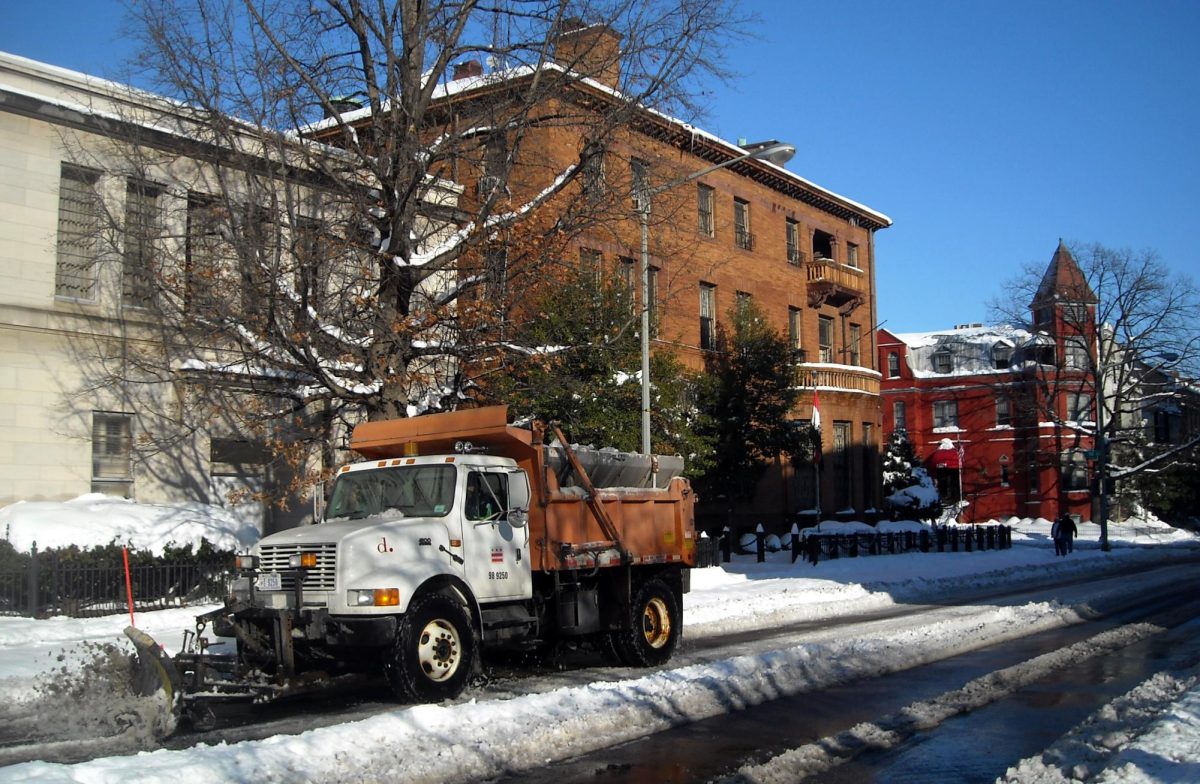
On Jan. 25, the largest snowstorm in recent years swept through the DMV. Over the course of the day, the region received between 7 and 11.8 inches of precipitation before it turned into sleet and freezing rain. Though snowfall was confined to Jan. 25, local departments tasked with clearing the snow were unable to manage it effectively, leaving some residential neighborhood roads in Maryland and Virginia unplowed for up to four days after the storm ended. This failure to clear the snow is primarily due to a lack of experience with heavy snowfall, a shortage of resources to manage snow removal and ineffective plowing.
Washington, Maryland and Virginia residents alike experienced difficulties getting out of their homes after this past storm because their roads were not cleared enough for cars to safely travel. These difficulties are because many plowing efforts were initially concentrated on highways, interstates and major roads rather than residential areas. Ultimately, many Washington residents became exasperated by how long it was taking local departments to clear the snow, especially since many still had to go to work and run basic errands. As a result, some neighborhoods chipped in to hire private companies to manage the snow for them. These companies were able to get the snow cleared within hours, a task local infrastructure was unable to do for several days.
Even school properties, which are typically a priority for local governments to clear, were not fully cleared for days after the storm. In Montgomery County, for example, schools reopened five days after the storm because some parking lots were not adequately cleared for students to safely return.
Put simply, the DMV region does not have the same experience with snow-clearing as cities farther north do. Prior to the January storm, the last storm of similar magnitude occurred in 2022, when the DMV also received around 11 inches. Since the area does not frequently experience major storms, the snow-clearing system is poorly maintained, leading to poor performance and equipment failures when heavy snow does fall.
Additionally, the snow-clearing budget is typically small because it is not used often. While this approach does save money in years with little snowfall, years like this one require local institutions to go over budget and stretch already limited resources to clear the snow.
Lastly, even when snow plows made it through the neighborhood streets, many residents complained about counterproductive plowing. For example, plows occasionally pushed snow onto already-cleared sidewalks, failed to clear more than one lane on multi-lane roads, pushed snow and ice in front of driveways and blocked in cars parked along the street. Instances such as these highlight further challenges with the existing systems, as even after roads were plowed, snow and ice still caused blockages.
The most recent January storm served as a poignant reminder that the DMV needs to rethink its blizzard management systems, as the current system is ill-prepared to handle heavy snowfall. As a result, residents either cleared the roads themselves or were “snowed in” until plows and salt came through days after the storm.

