
















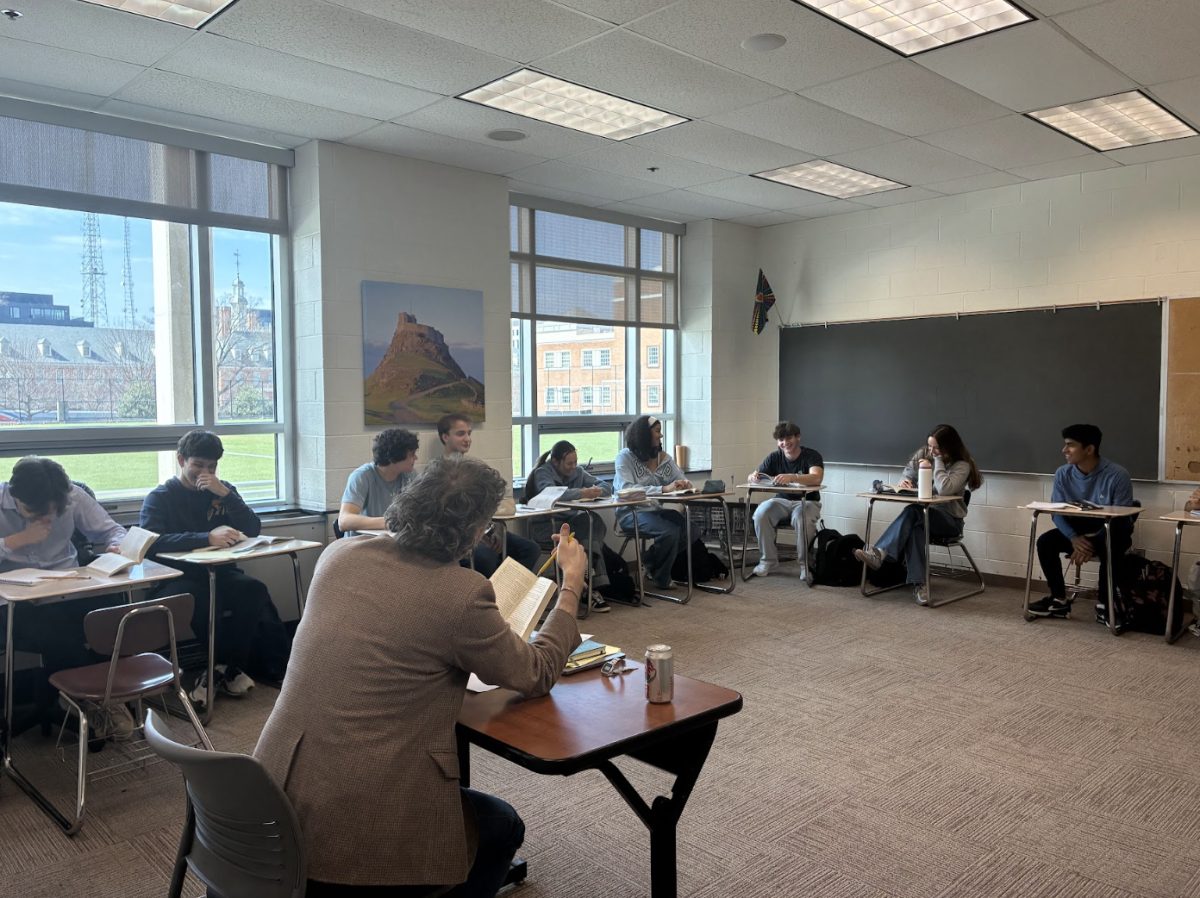





















During the first week of the second semester, students and teachers conducted feedback conferences in place of the traditional semester comments found on each student’s report card. As they began teaching new material, teachers met with each student to review their performance thus far. Despite the administration’s efforts to help students receive more in-depth comments, oral conferences will not necessarily have a long-term positive impact on students.
One of the most notable ways the change in how semester feedback is received is the role Sidwell parents have in the process. Report card comments are an interactive and helpful way for parents to become more involved in their child’s learning. These comments also help parents notice their child’s academic growth and areas for improvement. With the exception of freshman conferences, parents rarely interact with their child’s teachers.
Therefore, written comments provide parents with specific insight into their child’s performance and the opportunity to engage with their teachers. By moving to conferences, parents will not have the same access to teacher feedback, potentially making them less aware of their student’s learning.
Conferences are unhelpful for providing thoughtful feedback because they are intended to be no longer than five minutes. They are designed this way so that teachers can meet with every student without disrupting learning, thereby diminishing the thoughtfulness and constructiveness of the comments.
In contrast, personalized comments are written feedback, meaning students can review them multiple times to understand their main faults and weaknesses, and refer to them in the future to improve their learning. Moreover, written comments are concise yet detailed, allowing students to understand their areas for improvement without confusion.
When asked about the change, several students showed clear distaste for the conferences. “I think that conferences make it more awkward because instead of being able to receive feedback online, having our own thoughts and feelings, and having a chance to process, we are put on the spot,” said sophomore Jayna Agrawal. “I honestly prefer comments,” added sophomore Julia Pitt.
“Written feedback gives me more precision and accountability because I can look back and see exactly what my teacher thinks I’m doing well and can improve on.”
Although conferences can lead to an increase in bidirectional communication between students and their teachers, it is already encouraged in the current curriculum, ultimately rendering oral comments unnecessary.
“After reading through my comments, I can always set up a meeting to talk to my teacher,” Pitt said.
Conferences should be used effectively in conjunction with written comments, not replaced entirely.

