






























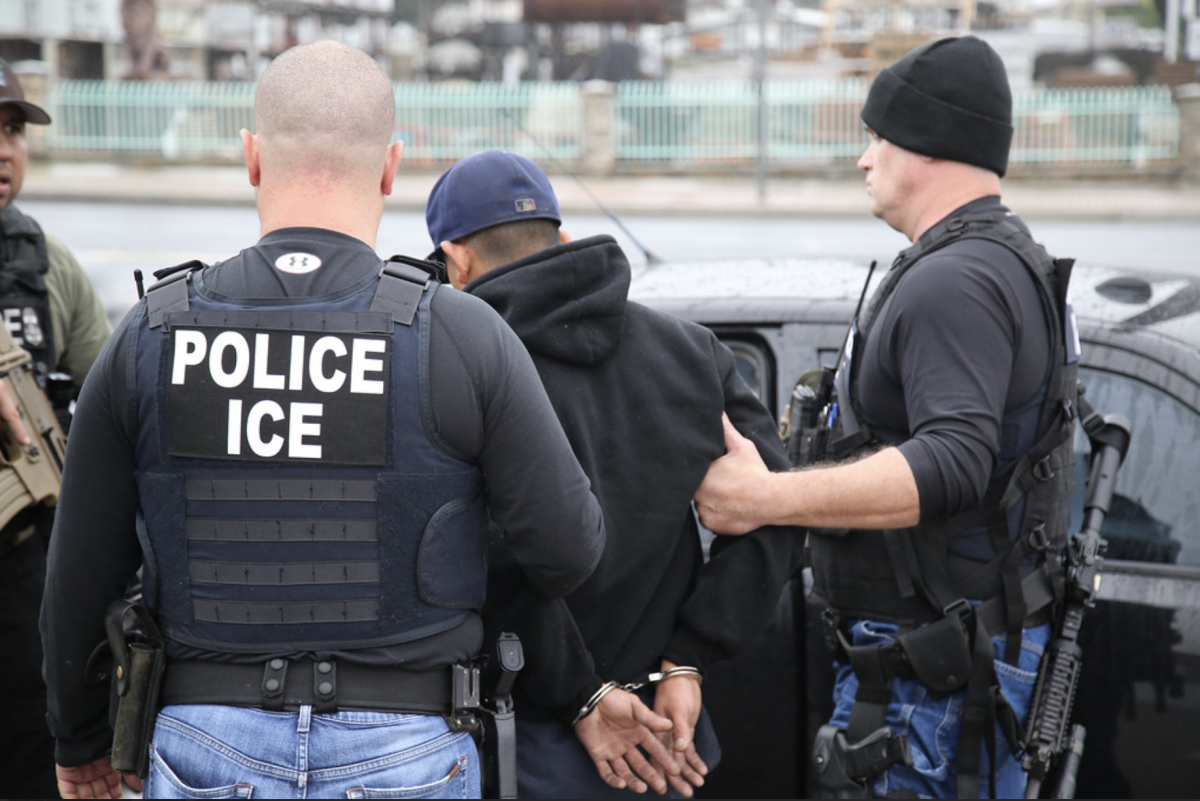
Immigration and Customs Enforcement (ICE) and Customs and Border Protection (CBP) initiated Operation Metro Surge in Dec. 2025, a mass-immigration enforcement campaign targeting the Twin Cities. Within weeks, the presence of thousands of armed federal agents in Minneapolis and Saint Paul sparked mounting tension, daily raids and growing fear among immigrant communities.
The rising tensions between government agents and the community eventually coalesced in the tragic shooting by an ICE officer of Renée Good on Jan. 7, a 37-year-old Minneapolis resident. ICE officers adjusted their tactics in response to increased public attention, including limiting verbal identification and reducing engagement with civilians. Despite these changes, ICE officers shot and killed Alex Pretti, another Minneapolis resident, on Jan. 24.
ICE activity persisted and remained highly noticeable. Observers reported that ICE interactions were often hostile; Patty O’Keefe, a trained observer, told the Sahan Journal that an ICE agent told her to “stop obstructing us; that’s why that lesbian bitch is dead” in reference to Good.
The New York Times classifies ICE operations as part of a national strategy that emphasizes large-scale, visible enforcement. Such operations rely on expanded federal authority and increased agent deployment, resulting in more frequent encounters between ICE and civilians.
In response to the ICE operations, community defense efforts in the Twin Cities have also expanded rapidly. What had previously been small, informal networks of activists grew into widespread, decentralized groups composed of residents who had not previously considered themselves politically active.
Annelie Lofgren, a high school student from Minneapolis, told Horizon that “everybody comes out together and tries to actively resist ICE.”
One of the most visible developments was the rise of civilian ICE patrol groups. These groups, coordinated primarily via encrypted messaging applications such as Signal, consist of residents who drive through neighborhoods to identify and report ICE activity in real time. Alerts are then shared with families and community organizations so individuals can avoid areas where federal agents are operating.
Additionally, in some neighborhoods, residents organized daily meetups at school bus stops, walked children short distances from buses to their homes to prevent ICE agents from detaining parents or guardians during school drop-off times and engaged in peaceful resistance through demonstrations. This includes school walkouts, filming of ICE agents and community observer training classes. These actions were not officially organized protests, but collective efforts rooted in proximity and trust between neighbors, many of whom had lived alongside immigrant families for years.
Operation Metro Surge marked a significant escalation in federal immigration enforcement in Minnesota. As documented by NPR, The New York Times and Sahan Journal, ICE interactions during the operation were frequent, highly visible and often conducted in public spaces, resulting in heightened fear among residents.
