








































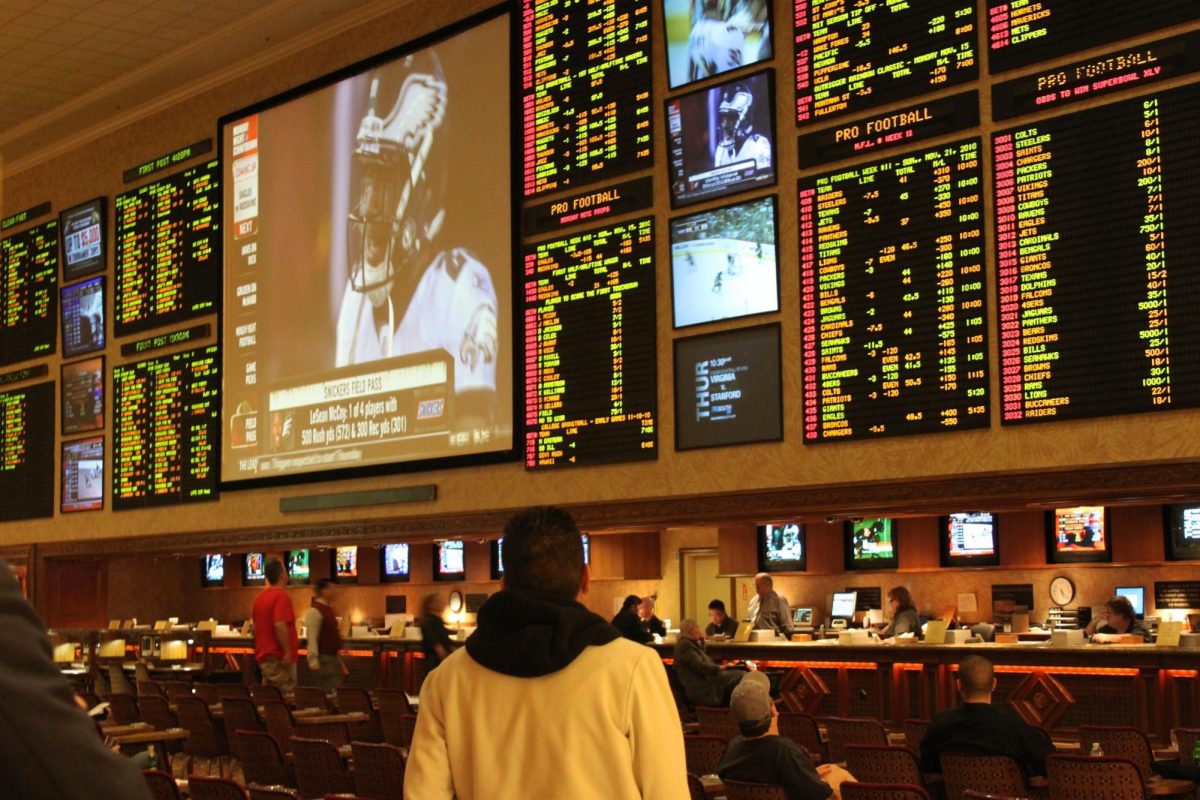
Sports gambling has shifted from an exclusive hobby to a dominant presence in professional athletics. DraftKings, FanDuel and similar apps have become household names, pushing sports wagering into the center of American sports culture. Advertisements for such gambling companies run during nearly every major game. Betting lines are displayed in real time as just another statistic on sports websites. However, every gambling advertisement must display the gambling help phone number. This underscores the deeper problems with sports gambling and how its normalization may be causing more harm than intended.
However, gambling is not only harmful to those watching, but also to professional athletes. In the past year, several major leagues have faced gambling-related scandals. Just this year, current and former NBA players and a coach were among 34 people arrested for conducting rigged sports betting and poker games. The NCAA also announced strict new rules after uncovering gambling incidents involving student-athletes. Each case hurts trust in professional sports and raises the same fundamental question: if players and staff are surrounded by betting, how secure is the integrity of the game?
The numbers are also startling. Americans spent well over $100 billion in legal sports bets last year, and that number continues to rise sharply. A growing percentage of adults, especially younger men, place bets weekly. According to a 2025 survey by U.S. News, almost a third of sports bettors say they have debts they attribute to gambling. Of those, more than half are facing debts of $500 or more.
At the same time, public health researchers have warned that sports-betting apps are contributing to higher rates of anxiety and addictive behavior.
Despite the cheerful and seemingly normal advertising, sports gambling is not harmless. It is an unhealthy habit for many people, and its constant visibility only increases its potentially negative influence. When every broadcast commercial encourages fans to “make the game more exciting” by placing a bet, it normalizes a behavior that can quickly spiral out of control. Gambling companies rely on this, which is why they invest millions in promotions and “bonus bets” designed to keep users hooked.
This problem goes deeper than personal harm, however. Gambling changes the meaning of the sports themselves. Instead of focusing on performance or strategy, fans increasingly focus on odds, player props and cash payouts. A rookie’s debut becomes a chance to make money. When gambling becomes the lens through which games are watched, the games lose something essential. And the numerous internal scandals also show that players and coaches are susceptible to the allure of gambling.
Banning sports betting altogether is not realistic. Illegal gambling has existed for decades, and it would flourish again if legal outlets disappeared. Prohibition would likely push betting into unregulated spaces, making it harder to monitor and even easier to abuse. The goal should not be to eliminate gambling, but to limit how aggressively it is promoted and how closely it is tied to the culture of professional sports. Gambling companies should not be running advertisements during every sports game.
Broadcasters should dial back on content that is gambling-centric:f: fewer sportsbook ads during games, fewer logos plastered around arenas and less glamor attached to betting in general. It also means leagues enforcing strict, transparent rules about who can bet, when they can do it and how violations are handled. If fans are expected to trust the outcome of a game, they deserve clarity.
Gambling does not have to destroy the experience of engaging with professional sports, but the way it is currently presented makes it harder to protect what makes sports meaningful. When betting overshadows athletic performance, when broadcasts sell wagers more aggressively than the games themselves and when scandals become all too common, something is clearly wrong. Sports gambling will continue to exist, but it certainly does not need to be as heavily normalized and pushed onto watchers as it is currently.