




































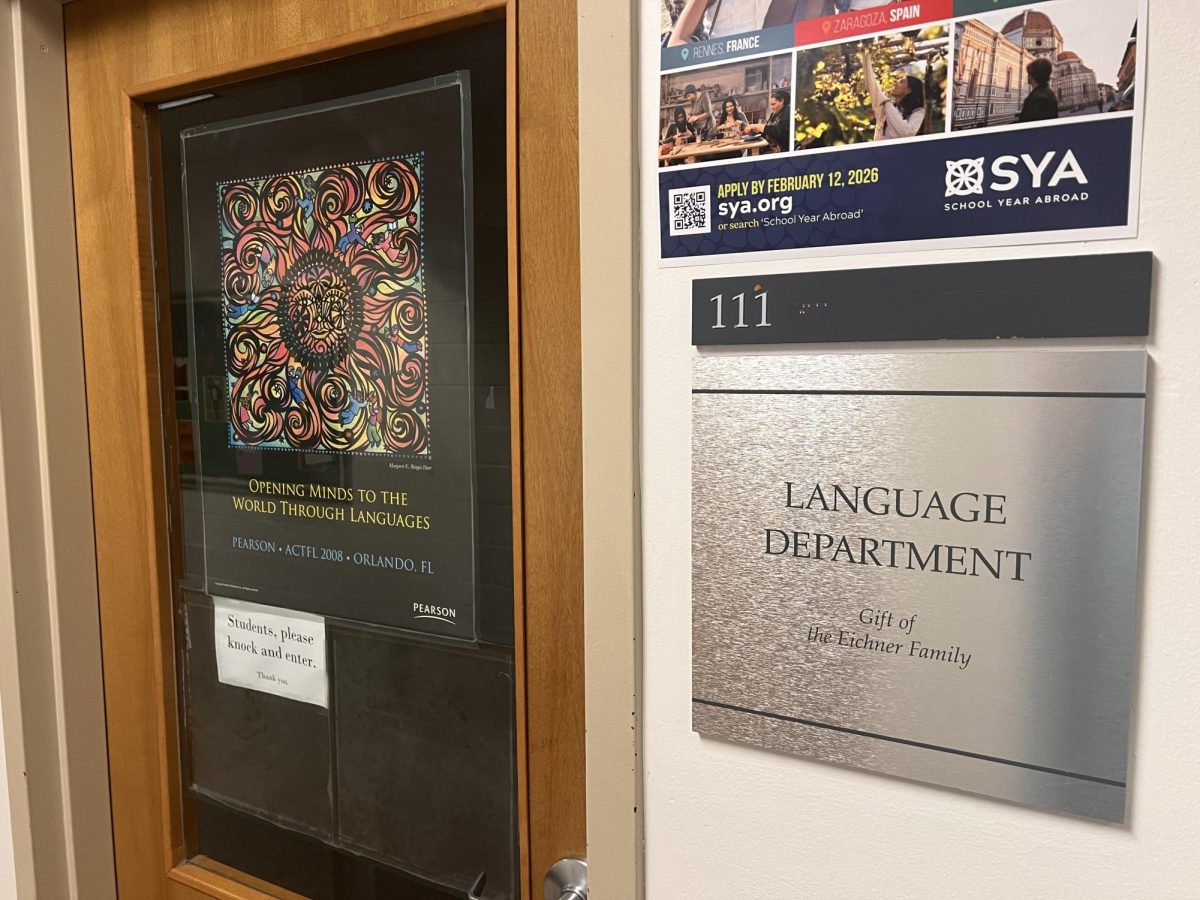
Sidwell offers excellent language options — Spanish, French, Latin and Chinese — but in today’s world, that may not be enough. Adding more electives like German, Arabic, Hindi or American Sign Language (ASL) would offer students a chance to explore more cultures, connect with more people and prepare for a global future.
Learning a language is about experiencing the world through another perspective. If Sidwell offered other spoken languages, students could learn more about regions that are critical in politics, science and business. ASL would also help students communicate with members of the deaf community, encouraging inclusion and empathy.
Adding new language options would also strongly strengthen Sidwell’s stated commitment to diversity, inclusion and community. Language courses at Sidwell frequently incorporate culture and history units, so a variety of language courses would help give students the opportunity to learn more about the world around them and have a deeper understanding of world history. A student studying Arabic might better understand Middle Eastern traditions and faiths, while one learning ASL would gain awareness of accessibility and the deaf community. These experiences build respect for different cultures, helping Sidwell carry out its mission of creating a more inclusive and understanding community.
Additionally, adding more language options would make the language program at Sidwell more flexible. Not everyone wants to take four years of a single language, but many students would love to try shorter, one-semester electives. These could focus on basic communication skills and cultural understanding instead of full fluency, letting students explore new interests without the pressure of a long-term commitment.
Furthermore, high school is the best time to learn a new language. It is easier for young people to learn new languages, according to The Guardian. The ability to speak multiple languages helps people learn about new communities and connect with others, so it is important to learn languages before adulthood. Finally, learning different languages helps students stand out. Nowadays, nearly every high schooler applying to colleges takes a language class, usually for all four years. This is the case for Sidwell students as well. However, not many college applicants can boast knowledge of a third language, which students could do if they took extra elective language courses. Colleges and future employers value people who understand other cultures and can communicate across differences. Offering more language electives would show that Sidwell encourages curiosity and global education, and students would receive skills helping them be successful in college and when entering the workforce.