












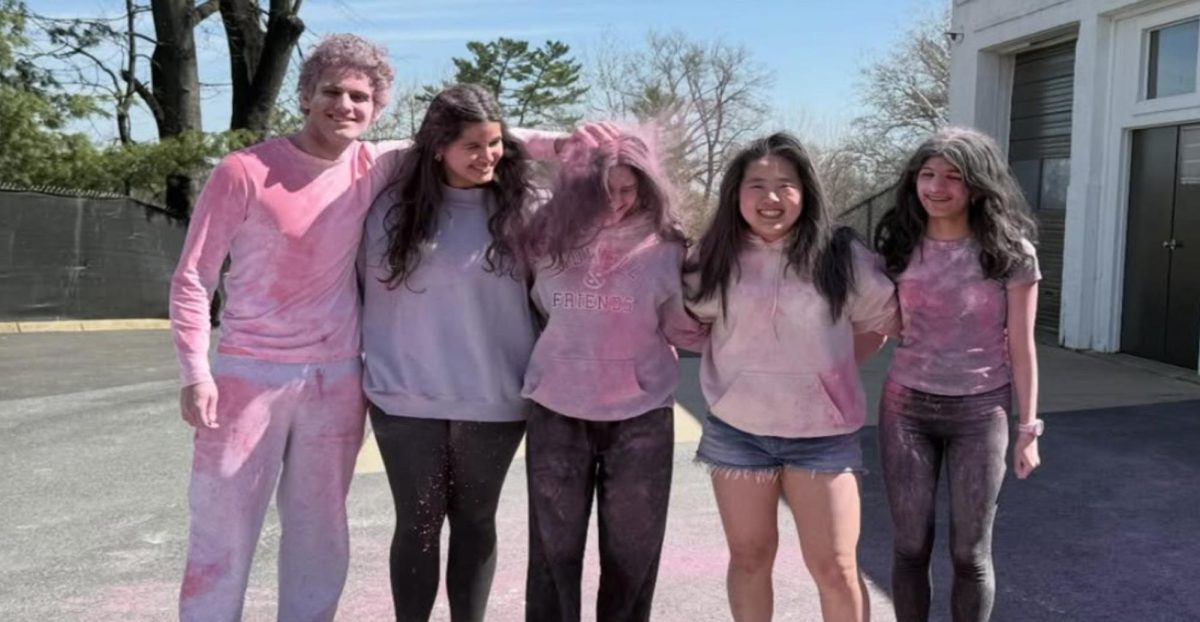







Thanksgiving has been an important holiday in the U.S. for centuries, rooted in American history and tradition. The day is well known for turkey, football and gatherings with extended family. However, in recent years, November has started to feature a popular new holiday: Friendsgiving.
According to CNN, this unofficial holiday first appeared on the internet in 2007 but did not start gaining popularity until 2013. Some people credit the show “Friends” for introducing the concept of Friendsgiving, while others believe it only gained momentum after a 2011 ad campaign by Bailey’s Irish Cream. The word “Friendsgiving” was officially added to the Merriam-Webster dictionary in 2020, according to Delish.
Friendsgiving has gained international attention for a variety of reasons, especially as younger generations have embraced lives without marriage and children. When people start families later, they do not have an immediate family to celebrate with and choose to spend time with their friends or colleagues instead. Additionally, students have been moving further away from their parents for college or job opportunities, particularly after the Great Recession in 2008, and the Thanksgiving break is simply not long enough to travel between countries or even continents.
“I go home maybe once a year at Christmas. My friends are my family here,” Meagan Clark, a Maryland resident, said in an interview with CNN.
Despite the widespread popularity of Friendsgiving, there is debate over whether the holiday should replace Thanksgiving or be celebrated alongside it.
“There’s always lots of talk about how family events can be toxic for some people,” Meghana Srikrishna, a George Washington University student, told CNN. Some replace Thanksgiving with Friendsgiving because it is hard to see extended family due to trauma, or because their families never celebrated in the first place.
Still, Srikrishna stated she does not want to imply that chosen family is more important than blood family in modern society. She prefers to celebrate both Friendsgiving and Thanksgiving. However, not everybody has that option.
Friendsgiving usually takes place the weekend before or two weekends before Thanksgiving, so as not to directly conflict with any travel plans. Many Friendsgiving meals tend to deviate from the traditional Thanksgiving menu to avoid stealing the show, with the most popular Friendsgiving meals being potluck-style. When everyone is assigned a dish, groups can try out some less traditional recipes that are important to an individual’s culture.
Students at Sidwell have varying opinions on Friendsgiving and whether its importance outweighs the traditional and historical celebration.
Sophomore Norah Chang spoke on the importance of Friendsgiving, especially in the present-day context.
“Nowadays, a lot of immigrants don’t have their normal community around them, so Friendsgiving is a great way to bond with people of the same culture or heritage, even if they’re not surrounded by family,” Chang noted.
“The new generation is constantly on screens and social media, making holidays of gathering such as Thanksgiving all the more special. It’s sad that sometimes when friends hang out with each other, all they do is watch a movie or scroll on Instagram together,” she continued.
Chang emphasized that “It’s important to just live in the moment and be grateful for our real life, not constantly comparing ourselves to social media.”
“During COVID, I was taken out of the norm and placed in a space that was isolated from the people around you,” Chang added.“Although I never thought about Friendsgiving that way, I can see how it allows people to reconnect and socialize with others you couldn’t see during the pandemic.
“Our friends are often people we take for granted. Imagine a school life without your regular circle of friends. If you have friends, you should always be grateful for them,” sophomore Sophia Cuttica added.
“While family is important, Friendsgiving is a time where people give thanks back to their community that supports them everyday, and for a lot of students, that’s their friends in school. It’s a time to thank the people you surround yourself with and reciprocate your thanks to your broader community,” Chang said.
Sophomore Jayna Agrawal mentioned that she has hosted a Friendsgiving with friends both in and out of Sidwell.
“The Friendsgivings I’ve been to and hosted have all been potluck style, which to me, makes it even more special. The fact that everybody brings their own dish means there’s a lot of diversity in food, and you get to try what other people and their family love. This makes the experience a unifying one,” she said.
Junior Tasbih Bakshi added that last year she held a Friendsgiving where “my friends and I got to bake together and paint pumpkins … It was different from regular Thanksgiving because my friends and I were able to talk about how much we love spending time together.”
Still, some people have a clear preference for the traditional holiday.
“Honestly, I think Thanksgiving is better. You see your friends every day, but during Thanksgiving, you can see extended family who live far away,” sophomore Kimi Saad said.
Whether you support the growing popularity of Friendsgiving or prefer to stay rooted in Thanksgiving traditions, the rise of Friendsgiving reveals that the new generation is prioritizing connection over familial obligations.