



















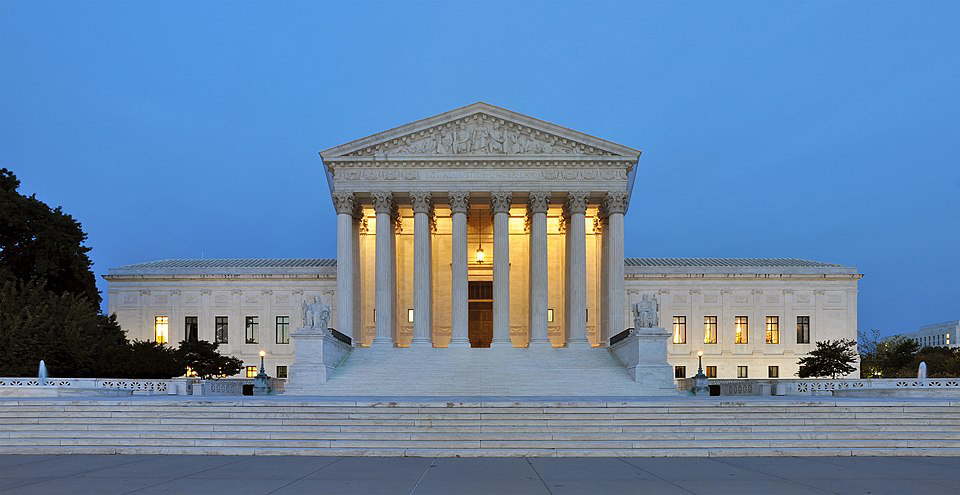
The United States Supreme Court’s April 9decision in Louisiana v. Callais has sparked national debate over voting rights, representation and the role race should play in congressional redistricting. In a 6-3 vote, the Supreme Court overturned Section 2 of the Voting Rights Act.
After lower courts ruled in favor of the plaintiffs in 2022, citing the new district as unconstitutional, civil rights groups such as the NAACP and individual Black voters appealed the decision and brought it to the Supreme Court.
Section 2 of the Voting Rights Act was designed to prevent voting practices that weakened the political influence of racial minorities, particularly in Southern states with histories of segregation and voter suppression, regardless of discriminatory intent. According to the Campaign Legal Center, controversy has surrounded Section 2 because it demands lawmakers to use race as a factor when determining district boundaries
Non-discriminatory intent included redistricting efforts concentrating voters from a racial minority in a district, which would dilute the voting power of this minority. By strategically gerrymandering, designing districts to benefit certain groups, lawmakers could more accurately represent populations within the electoral system.
Louisiana vs. Callais focused on the representation of majority-Black districts during Louisiana’s redistricting after the 2020 Census. This case was brought to the court after the redistricting in the 2020 Census. In the redistricting case Robinson v. Ardoin, the court found that when the state of Louisiana drew a single majority-Black district in 2022, it was in violation of the Voting Rights Act. This forced Louisiana to redraw the districts, creating an additional majority-Black district. Non-Black voters led by Phillip Callais then brought the new map to court, claiming the new district wasn’t constitutional.
Many Republicans argued that race-based districting was inherently discriminatory and violated the constitutional rights of the citizens.
On the other hand, Democrats contended that Republicans were attempting to politically gerrymander Louisiana while invoking the terms of racism and constitutionality.
Critics of the ruling argue that it could allow currently red states to redraw districts in ways that reduce Democratic representation, a motion accelerated by Trump’s falling approval ratings
However, the overturning of Section 2 will not affect all current gerrymandering issues. For example, maps in Texas, California and Virginia were all re-districted at the behest of their governing political parties without regard to race, while Section 2 solely applies to race-based gerrymandering, which is most common in Southern states.
In addition, the 6-3 vote of the Supreme Court raises questions about the politicization of the Court — President Trump appointed three of the Supreme Court’s nine Justices.
Overall, a solid amount of the Sidwell community feels frustrated with the decisions of the Supreme Court on the Louisiana vs. Callais, given the potential to impact the future elections, fairness and representation within America as a whole. As debates over voting rights continue, the ruling in Louisiana vs. Callais will shape future elections, raising broader questions about fairness, representation and the role of the Supreme Court for Americans.