


















On Jan. 19, Sidwell hosted an All-School Day of Learning and Service in honor of Martin Luther King Jr. Day, marking the 40th anniversary of the federal holiday with a program centered on reflection, education and civic action. The event brought together students, families and community members for what organizers described as a “Day On, Not a Day Off.”
Sidwell first hosted a Martin Luther King Jr. Day program in 2015 and held annual observances until 2020, when the pandemic interrupted in-person gatherings. This year’s event, organized by all-school Parents of Black Students Clerks Sheba Douoguih and Shannon White and Parents Association Vice Clerk Bomi Anise, combined historical education with community service and cultural programming designed for all ages.
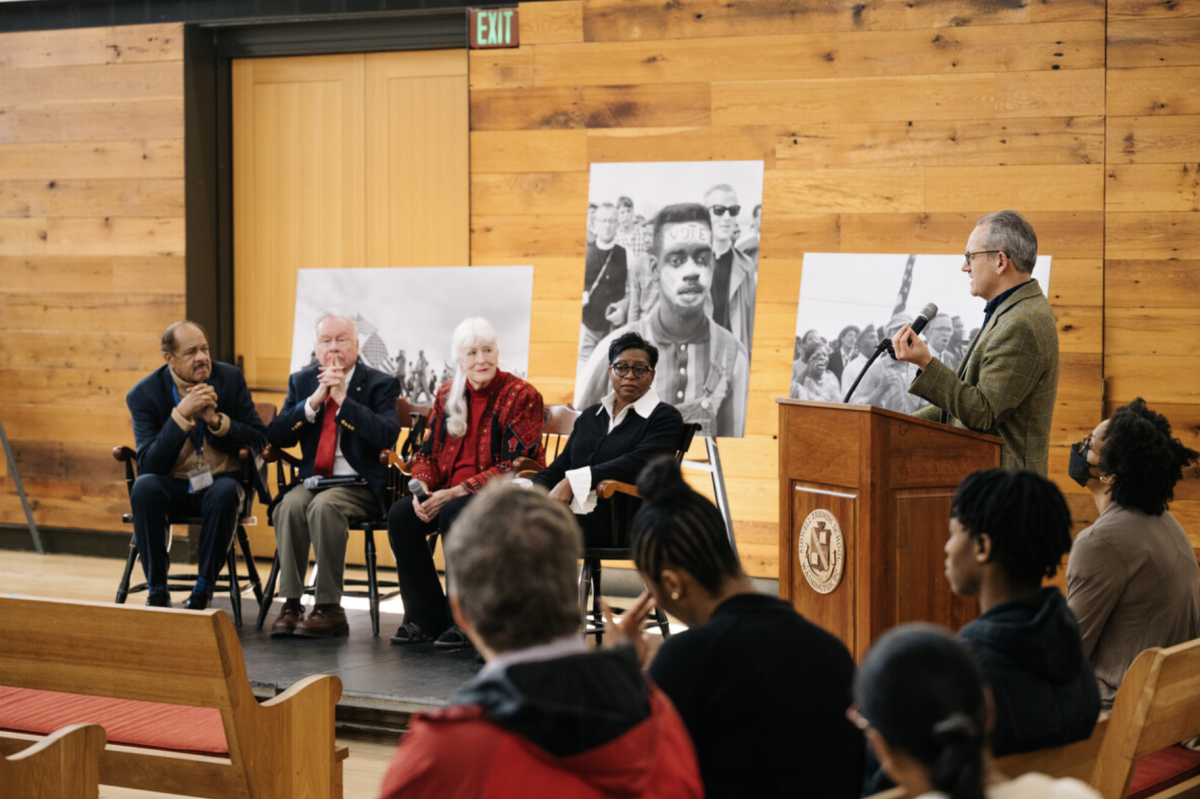
The day began at 9 a.m. with arrivals in the Arts Lobby and a light breakfast. At 9:30 a.m., students gathered in Caplin Theater for programming that included a performance by Culture Kingdom Kids, while adults listened to opening remarks from Head of School Bryan Garman and Endowed Faculty Chair of African and African-American Studies Dr. Jewell Debnam. Black-and-white photographs by Matt Herron, a civil rights photographer, lined the Rubenstein Gallery and the Robert L. Smith Meeting Room, creating an immersive visual introduction to the day. The images captured moments of protest, courage and resistance from the 1960s, including marchers silhouetted against the horizon during the Selma-to-Montgomery march and young demonstrators confronting arrest.
Another photograph showed a marcher wearing zinc oxide across his forehead spelling the word “vote.” Together, the exhibit encouraged viewers to reflect on the role ordinary people, many of them young, played in the Civil Rights Movement.
Michael DiMaggio, co-founder of Proximity Partnership Consulting, and Dr. Jeannine Herron, a neuropsychologist, Head Start co-founder and Herron’s widow, provided historical context for the photographs. DiMaggio said the Civil Rights Movement depended on the courage of young activists who risked their safety and futures for change. He added that Herron’s work allows families and communities to see themselves reflected in history, connecting past struggles to present conversations about equity. Dr. Herron shared personal reflections about her life with her husband and the Quaker principle of bearing witness, which guided their activism and professional work.
At 10 a.m., a Narrative and Justice panel brought together Herron, artist and photographer Walter Naegle and Rev. Dr. Paul Smith, all of whom had direct ties to the Civil Rights Movement. Moderated by Anise, the discussion addressed the dangers activists faced, the alliances formed across race and gender and the lessons younger generations could draw from that era.
Naegle spoke about civil rights leader Bayard Rustin’s determination to persist despite violence, imprisonment and discrimination, noting that Rustin’s Quaker faith shaped his resilience. Smith encouraged the audience to recognize the leadership potential of young people and described memory as a force that sustains social movements.
Dr. Herron reflected on the role of music in strengthening activists, recalling how singing together built solidarity before marches and demonstrations. She later invited the audience to stand and join hands in a collective rendition of the gospel song “This Little Light of Mine.”
The formal program concluded with an action commitment encouraging participants to apply the day’s lessons in their communities. Service projects began at 11 a.m., allowing attendees to support organizations across the Washington area. A community celebration followed, featuring local food trucks serving African American and Latin American-inspired cuisine.
Anise described the energy in the room as “palpable” and said that viewing Herron’s photographs underscored how joy and resistance often coexisted during the movement.
“One of the most powerful things that one of the speakers asked of us was, ‘Who are you and what do you care about?’” senior Zara Lakhanpal added. “She empowered us, especially young audience members, to stand up for what we believe in.”