



















Beginning this semester, Sidwell teachers will no longer be required to write comments on their students’ transcripts. A committee of faculty members decided to replace the traditional first-semester grade comments after a year of brainstorming the changes and gaining approval from the full administration and faculty. However, the change does not apply to the first and third quarter reports, on which students will continue to receive personalized feedback.
Traditionally, students received personalized comments in addition to a final letter grade. However, now, personalized feedback will be replaced with a global course comment, detailing everything covered in the semester.
Upper School Principal Robert Gross is optimistic about this change and notes the benefits of in-person meetings.
“While written narrative comments are no doubt helpful, they are unidirectional,” Gross said. Upper School English Teacher Monica Schroeder, a committee member, added that oftentimes, when writing semester comments, she feels as if she is “typing into the void.”
With in-person meetings, however, “[students] have to sit there, they have to talk, they have to participate,” Schroeder said. “Instead of just saying [something] in a comment, we’ll just have the time to kind of work through that together.”
Schroeder added that these meetings can also provide students with guidance from their teacher outside of class time if they were unable to meet previously, and can be a space to take personal responsibility for not doing so in the past.
The decision of how to carry out conferences has been left to the discretion of teachers. While some schedule mandatory meetings, other teachers have made them optional, giving students the opportunity to decide if they need to meet with their teacher. A few teachers have continued writing personalized comments on report cards, regardless of the new policy.
In the early stages of this shift, Gross and his fellow committee members are open to feedback from students and faculty alike. Thus far, students have expressed concern about written records of these meetings for future reference.
Previously, comments remained on students’ grade reports if they choose to revisit them throughout the semester. To this, Gross replied that there is no requirement for a written record, but assured that “we will be eager to receive feedback from faculty and students on how they go this first time, to improve them for next time.”
While there are potential problems with this change, Schroeder explains that “we can’t really know [the benefits] unless we try, and I think that there are a lot of good reasons to try.”
Each teacher has to schedule and complete meetings with all their students within a three-week period that began at the start of the semester. This added time pressure may prove to be an obstacle for some students, since most meetings are scheduled during extension periods or during students’ free periods. From a teacher’s standpoint, Schroeder has not had a difficult time scheduling meetings, but acknowledges that “everyone’s doing [them] a little differently.”
Sophomore Sevak Stepanyan described the change as positive because “conversation allows for a more dynamic environment resulting in more insightful observations that would not be possible through writing.”
Similarly, sophomore Sophia Cuttica said “it’s great to get verbal feedback, and I like to ask specific questions about my work in person.”
Schroeder, however, stated that the content of the meetings would be “very similar to what I would say if the student came to meet with me” throughout the semester and “instead of just saying that in a comment, we’ll just have the time to kind of work through that together.”
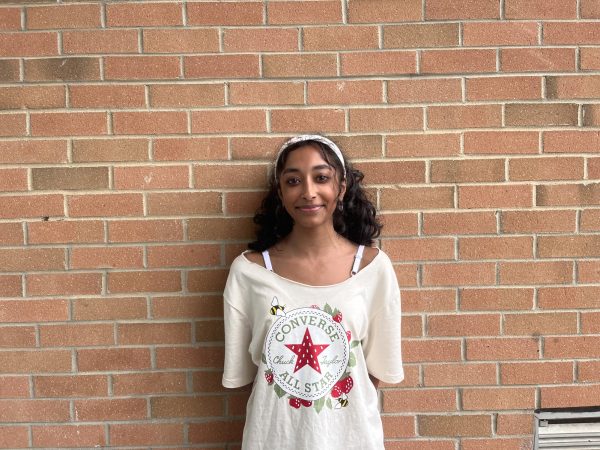
While she initially thought the transition “would be an awkward experience,” sophomore Jayna Agrawal said that “after having [her conferences], I realize that they’re actually more helpful because you get to contribute to the conversation and ask for things you actually want feedback on.”
Agrawal did acknowledge that “because teachers have to do so many [conferences] it’s hard to get feedback in a timely fashion,” a problem that was avoided with the old approach of comments on semester report cards.
Schroeder and Gross are excited to see how student feedback can improve this process and streamline the improvement of academic performance. The main goals of this pilot were to create “[something] more interactive and relational [and] better center student voices,” according to Principal Gross. The in-person meetings will allow for “new and unique component[s]” such as student feedback, and the ability to work through specific examples.
With the timeline for these meetings, Schroeder believes that “January is just a good time for everyone […] It’s just a good reset time [and to] take the first couple days to review.”
With the timeline for these meetings, Schroeder believes that “January is just a good time for everyone […] It’s just a good reset time [and to] take the first couple days to review.”
With the timeline for these meetings, Schroeder believes that “January is just a good time for everyone […] It’s just a good reset time [and to] take the first couple days to review.”