






















Computer Science is an optional course that does not count towards a student’s graduation requirements. Nonetheless, it provides students with the opportunity to explore a nontraditional subject that can be an asset in a wide variety of jobs. Therefore, it should be required of all students at least once in the Sidwell curriculum.
The subject of computer science enables students to develop problem-solving skills that can be applied across different environments. Through trial and error when experimenting with code, students must persevere through challenges and use logical reasoning to find solutions. These skills are crucial for taking on new experiences and problems as high school students begin to transition into adulthood. If required, CS can be a way for students to develop essential abilities that will benefit them later in life.
CS classes are intentionally designed to provide students with the tools necessary to complete a given assignment, but without direct guidance. CS Teachers Martin Suresh and Darby Thompson encourage questions but will answer them in a way that points students in the right direction while still allowing them to experience difficulty. As a result, students experience and learn to tackle problems proactively.
Sophomore Victoria Wang, currently taking CS1, describes how the majority of positive moments are rendered after having faced difficulty.
“Overcoming problems with my peers is always challenging, but once you actually get the project working, it’s really rewarding and satisfying,” she said.
Computer science also allows for the development and exemplification of teamwork and collaborative skills. CS assignments require all students to approach and solve problems similarly, while always tailoring them to include individual aspects. This allows students to learn from each other while concurrently finding solutions on their own. A teacher can indicate the steps students should follow, but it is always up to them to brainstorm solutions.
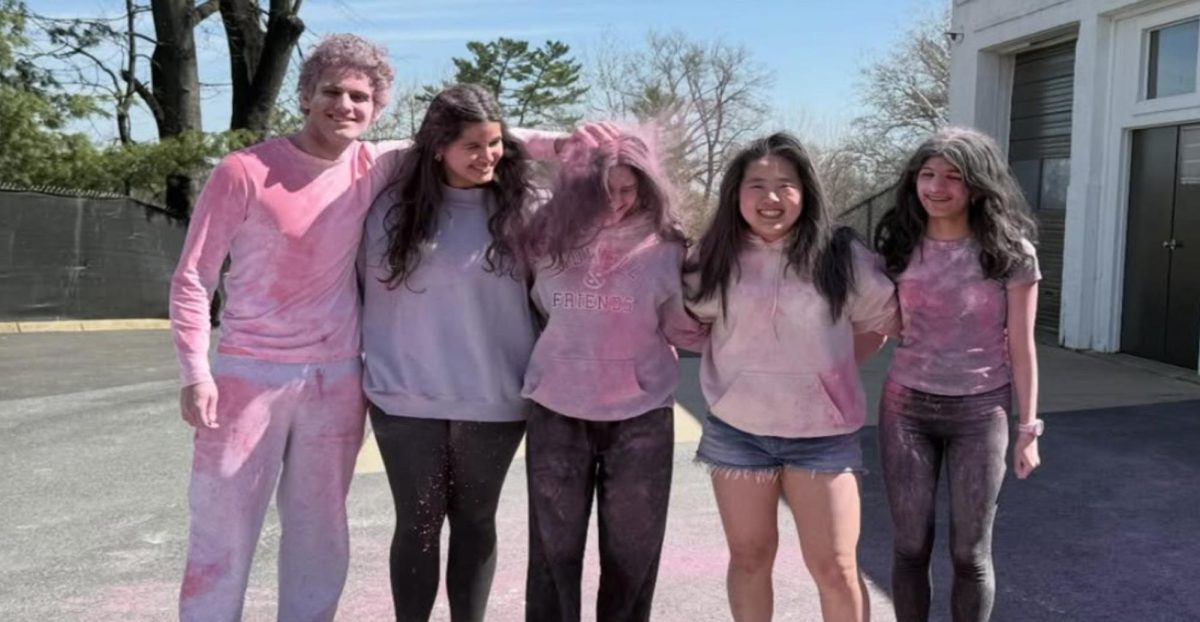
Sophomore Alexis Larson who currently takes CS1 said that overcoming problems with her friends is her favourite part. “I enjoy doing CS even when it’s hard because it can be fun struggling with your friends…It is not as intense as I thought it would be.”
Taking a CS class does not require prior knowledge of coding, yet allows students to develop and understand the basics of programming along with what makes up the computer that is used every day. Similar to an art class, CS is designed to teach students skills in a low-stakes environment. There is typically no homework because all work is designed to be completed in class, so it never adds additional stress. In CS1, students can submit assignments to earn up to 90% if their first attempt was not successful, which encourages mistakes.
Suresh says that students should enjoy learning about coding and having fun while doing so. “We want to give students as many opportunities as they need to learn and not worry about a grade,” he said.
Without these worries, CS becomes a class purely dedicated for students to learn about the subjects that they are interested in as well as the development of fundamental skills that can be applied elsewhere.
Similar to an art class, CS also requires creativity. As there is no concrete definition of a good painting, there is no concrete solution to a question in CS. While there are rules and conditions a coder must adhere to, it is the combination and implementation of those skills that create a non-traditional piece of art. Instead of artistic techniques such as proper brush strokes, camera lens settings and clay modeling, coding combines the whimsy of language and pixel coloring to create the programs that everyone utilizes every day.
As in an art environment, Suresh further describes CS as “fun and low pressure opportunity to develop creativity.”
Computer science expands beyond the skill of coding itself as it also embodies prominent values that every Sidwell student should be exposed to through the requirement of the CS class.
