

















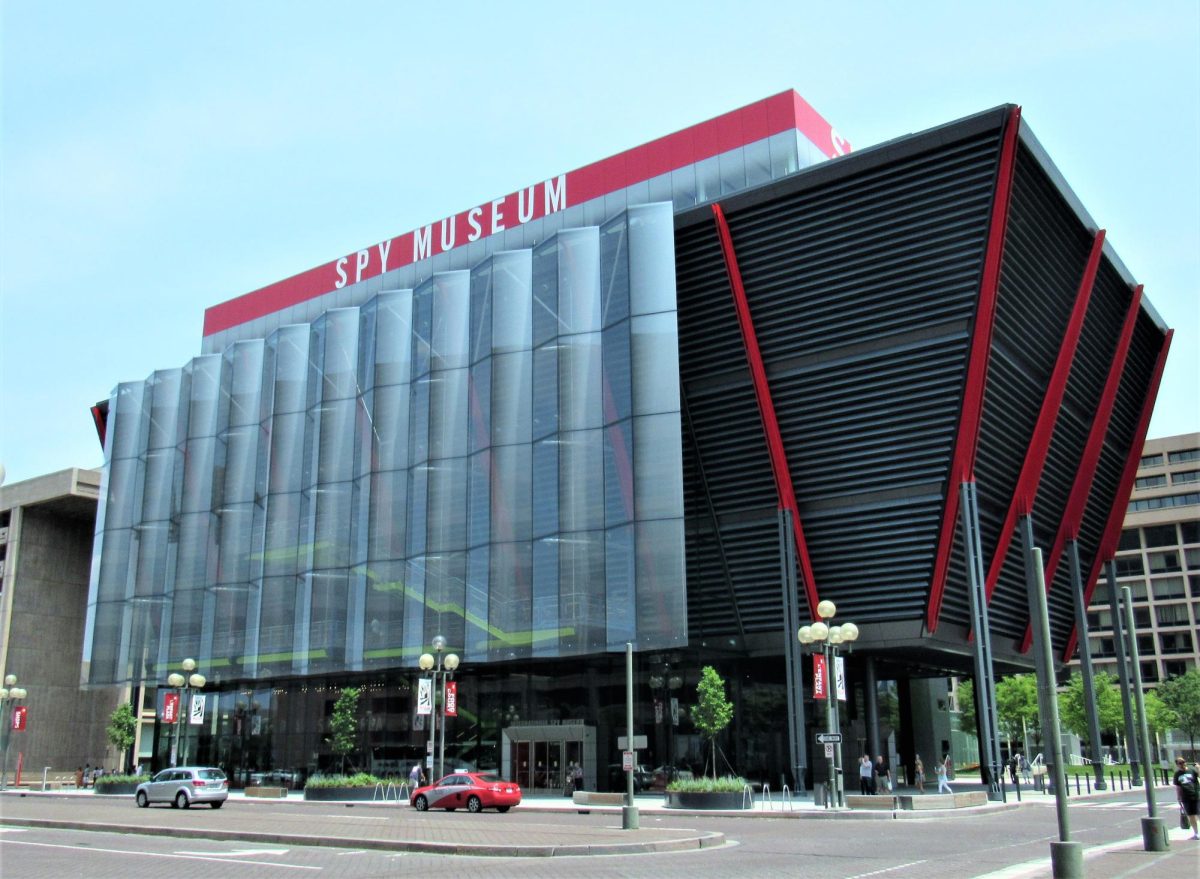
The Spy Museum’s new digital exhibit, “Open Source: Ukraine & the Intelligence Revolution,” explains open source intelligence (OSINT), detailing its history and impacts on the war in Ukraine.
OSINT is the exploitation of public information, including newspapers, maps, social media accounts and the internet to gain intel. It has been used for millenia: in Ancient Rome, factions frequently read newspapers to gain insight on their enemies, and during the Civil War, northerners and southerners read each other’s newspapers to try to gain insight on their strategies and activities. During World War II, OSINT collectors grew more creative. For example, to determine the results of Allied bombings on the Spanish-French supply lines, allied intelligence operatives analyzed the price of Spanish oranges, which rose when the routes were destroyed.
In the midst of World War II, President Franklin Delano Roosevelt created the Foreign Broadcast Monitoring Service (FBMS) to monitor foreign propaganda and media. The FBMS later evolved into the Foreign Broadcast Intelligence Service (FBIS), which became a branch of the CIA in 1947. In 2005, the Open Source Center was founded to analyze OSINT. Today, the Open Source Center has evolved into the Open Source Enterprise, but its purpose remains the same.
Open source information has had a tremendous influence on the course of the Russia-Ukraine war. The citizens of Ukraine have become involved in the war through intelligence collection, analyzing social media videos and accounts, newspapers, maps and other sources on the Internet to identify Russian troops’ locations and predict their next moves. Ukraine’s Security Service offers a WhatsApp channel and chatbot for citizens to report information. Furthermore, the nonprofit Center for Information Resilience launched the “Eyes on Russia” map, using social media posts, news articles and the Internet to locate Russian troops and areas struck by Russians in Ukraine.
The role of individual digital footprints has increased with the rise in social media use, leading to new forms of espionage and warfare. Social media can be both a powerful and detrimental tool in war. For instance, Ukrainian operatives assassinated a Russian commander while he was jogging after stalking his posts on the running social media app Strava.
In another example, from 2014, Russian soldier Alexander Sotkin’s Instagram selfies in Ukraine disproved Russia’s claims that its army was not operating in Ukraine.
Overall, as it relates stories like these, the exhibit is enjoyable and informative – and it’s as easily accessible as most OSINT.
In conclusion, the exhibit, a fifteen-minute experience, is enjoyable and informative. It can be found on Spy Museum’s website.