
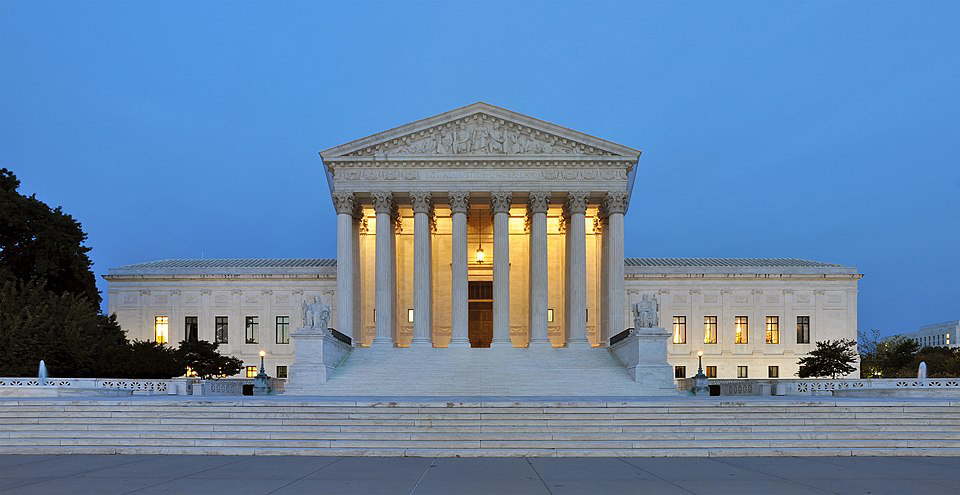

























On Oct. 1, the United States government shut down for the first time in seven years after a government funding bill failed to pass in the Senate.
The bill received 55 of the 60 votes necessary for passage. Democratic Sens. John Fetterman of Pennsylvania, Cathrine Cortez Masto of Nevada and independent Angus King of Maine, who caucuses with Democrats, voted for the Republican funding proposal. Republican Sen. Rand Paul of Kentucky joined the rest of the Senate Democrats in opposition, who seek an extension of Affordable Care Act (ACA) tax credits.
These credits, which expire at the end of 2025, allow for families with lower incomes to receive reduced healthcare and insurance costs. Additionally, Democrats are demanding the reversal of Medicaid funding cuts that were instituted in a Republican-passed tax bill this summer. As government funds run out without the approval of new funds, government agencies are forced to shut down and send employees home, leaving only a few essential services operating.
In anticipation of the shutdown, the White House urged agencies to arrange “a reduction in force,” suggesting that nonessential employees may end up fired, rather than furloughed.
In an estimate by the nonpartisan Congressional Budget Office, up to 750,000 government workers could see their work suspended until the government reopens, and those who stay working will not receive pay until then. These include air traffic controllers, public health workers and critical staff of the National Institute of Health. The Department of Homeland Security will remain mostly unaffected, given its lesser reliance on congressional funding.
Senate Democratic Leader Chuck Schumer stated in an interview on “Meet the Press” that he hoped Republicans would “sit down with [Democrats] and talk,” adding that the American public would blame the Republicans for the shutdown.
President Trump responded to the Democrats by stressing that a shutdown “[cut] things that they like, [and cut] programs that they like.”
Still, both parties remain set on their stances, with Republicans refusing to modify their spending bill, which funds the government at current levels through Nov. 21, and Democrats hoping to capitalize on their leverage to extend the health care premiums for low-income Americans.
In an attempt to avoid an extensive government shutdown, Senate Republican Leader John Thune urged Democrats to vote for the Republican bill and to take up debate regarding the tax credits later. He stated in an interview with MSNBC on Oct. 16 that he is open to offering Democrats a vote on the Obamacare subsidies, as long as the Democrats vote to keep the government open longer.
According to a Senior Communications Director in the U.S. House of Representatives, due to the shutdown, all staff are “focused on operations that support the continuity of Congress.” They stressed the importance of ensuring that staff affected by the shutdown receive the necessary support and remain vigilant and flexible to changes and updates.
Additionally, they described how “the Committee on House Administration distributes guidance” that clarifies what is considered an “essential function” and what “offices need to continue functioning on behalf of the American people.”
“What makes a Hill staffer successful is their ability to roll with the punches and know where to focus their time and energy,” the Senior Communications Director added.
Senior Madeleine Davant said she is concerned about the potential lasting effects of the shutdown, but also stated that the “shutdown is absolutely worthwhile if more Americans are able to receive [proper] healthcare and financial assistance.” Sophomore Teddy Berman added that there is “uncertainty [in his household] for the future,” as his family depends on government income for livelihood.
Half of the respondents to a Horizon form called the government shutdown “unnecessary,” while the other half believed it was a necessary part of politics. Sophomore Kabir Lakhanpal said that both “Republicans and Democrats have to work to be more moderate,” though he added that “Democrats have to be more accommodating.” He added that “[t]axpayers should not have to pay for illegal[’]s health care in the emergency room,” referring to a Republican point that undocumented people residing in the US are receiving taxpayer-funded health care programs.
According to HealthCare.gov, only US citizens, US nationals and “lawfully present immigrants” are eligible for coverage under Medicaid, Medicare and the Affordable Care Act. All low-income people in the US, regardless of immigration status, are entitled to treatment in hospitals under a law passed in 1986, however.
“Hospitals can get federal Medicaid funding to reimburse them for emergency services they are required to provide to low-income individuals, regardless of immigration status, including undocumented people,” according to Drishti Pillai, KFF’s Director of Immigrant Health Policy.
Lisa Sherman, the Deputy Chief Administrative Officer for the U.S. House of Representatives, stated that she was being proactive in monitoring the situation and recommended that everyone in the Sidwell community “be sensitive” and aware of the situation. Sherman also commented that although representatives are still working, their efforts are mainly focused on “responding to the shutdown,” and that many supporting staff, such as “janitors and food services workers,” have been furloughed, and their help is “greatly missed.”
The shutdown has had a widespread impact on many different agencies. Among those affected are the National Park Service and the Smithsonian, which are closing parks and museums across the country to address staffing shortages.
The Environmental Protection Agency will also see significant layoffs or furloughs, the most of any government agency, according to NBC News. The Federal Emergency Management Agency (FEMA) will close branches of its work, which provide critical support to those affected or at risk of disasters. Additionally, both the Centers for Disease Control and the National Institute of Health will be unable to conduct research and provide critical health information.