















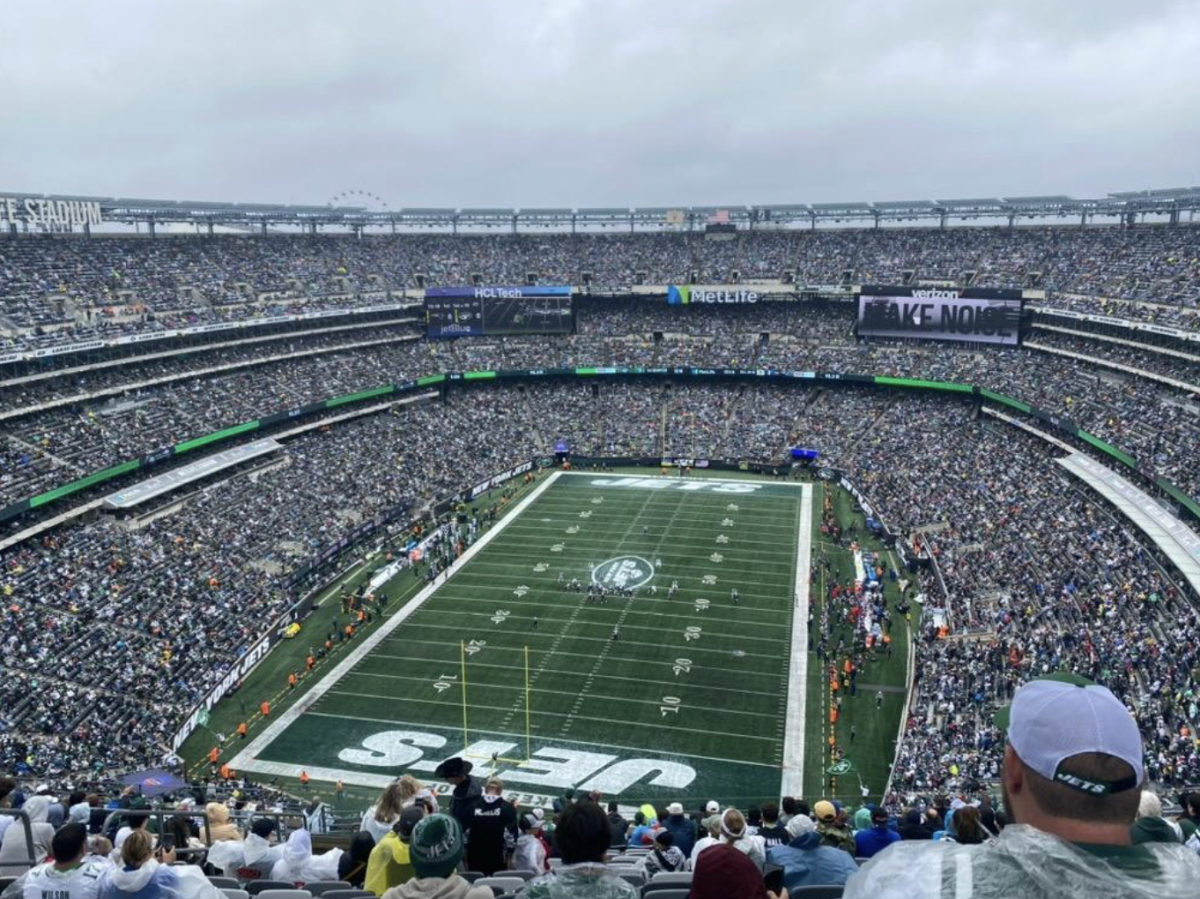
Serious injuries continue to plague NFL players on artificial turf — and nowhere is the problem more visible than at MetLife Stadium. The New Jersey venue, home to both the New York Jets and Giants, has become a flashpoint in the league-wide debate over turf safety after a string of injuries to star players.
A 2024 National Institutes of Health study has shown that artificial turf increases the risk of major injuries compared with natural grass. The study found that “the odds of injury requiring season-ending surgery were significantly higher on artificial turf compared with natural grass.” Despite this, many NFL teams still play on synthetic surfaces, and MetLife’s FieldTurf has drawn particular scrutiny for its alarming track record.
Since 2020, at least 16 players have suffered serious injuries on MetLife’s turf, including ACL tears to Malik Nabers and Nick Bosa in 2025. Others — Jabrill Peppers, Wan’Dale Robinson, Sterling Shepard and Aaron Rodgers among them — have also endured season-ending damage.
“Players are petrified of playing at MetLife,” one team executive told Yahoo Sports, adding that some athletes hesitate to suit up there if they’re already nursing injuries.
The field has garnered the name “Deathlife,” a name started by Odell Beckham Jr. — who suffered two ACL tears due to turf in his career, as well as fracturing his ankle at MetLife in 2017 — after Nabers’s injury.
As Nabers was carted off the field, Beckham tweeted that the NFL “take[s] all the precautions in the world with everything else when it comes to players’ ‘health’ and safety… get rid of the turf.” NFL players have clearly voiced their concern and anger with the hard, often sticky turf that not only MetLife but 16 other stadiums still continue to use in 2025.
The NFL Players Association even released a statement in 2023 stating that “moving all stadium fields to high-quality natural grass surfaces is the easiest decision the NFL can make.”
In 2024, the National Library of Medicine showed that turf fields increase the risk of non-contact lower-body injuries, particularly ACL and Achilles tears.
The synthetic surface grips players’ cleats too tightly, creating unnatural torque on knees and ankles during sudden changes of direction. Grass, on the other hand, allows the foot to release more naturally when players plant or cut, reducing the strain on joints such as those in the knee and heel area.
The NLM has reported that approximately 1.44 injuries happen per game on turf, whereas grass reduces that chance to only 1.22 per game, one of the most common being “turf toe,” a nerve injury to a player’s big toe due to strain from turf.
49ers QB Brock Purdy and Bengals QB Joe Burrow both suffered this injury on different fields than MetLife in the 2025 season.
This growing list of injuries across multiple venues shows that the issue isn’t isolated to one stadium but rather a league-wide problem that continues to threaten player safety.
Despite the studies and on-field proof that turf fields are harmful for players, owners are still hesitant to get rid of turf. The owners of the 17 franchises still using turf fields argue that grass is both hard to maintain and that they are worried about weather conditions, and that the general cost of grass is far more than that of turf.
However, MetLife Stadium has decided to install temporary grass to accommodate the World Cup match that they are hosting in 2026. The NFLPA may push for MetLife, along with others, to either keep the temporary grass or install new grass.
As the evidence piles up and NFL players continue to suffer turf-related injuries, NFL owners are facing large amounts of pressure to make the long-overdue change to grass to support player safety.