











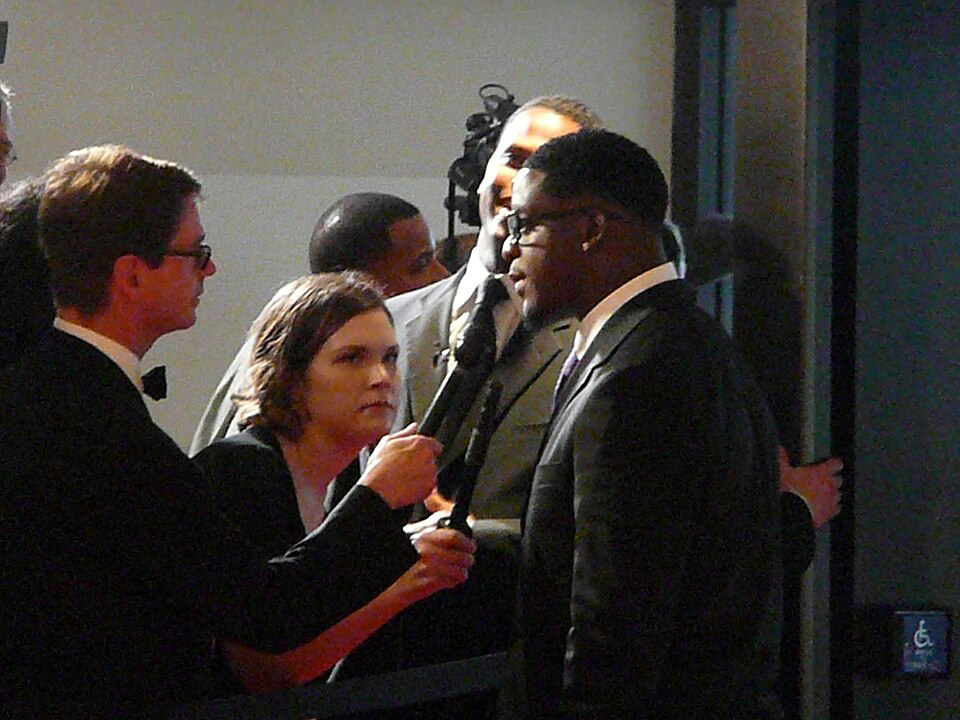
On the evening of April 25, someone fired gunshots near a security checkpoint at the Washington Hilton hotel during the White House Correspondents’ Dinner, an annual event attended by the president and other major figures for speeches and media awards. The shooting raised concerns over the security of high-profile political events. Ten days later, another shooting occurred near the Washington monument targeting federal officers, creating unease regarding the broader issue of politically motivated gun violence arose.
The suspect of the Correspondents’ Dinner shooting, Cole Allen, had checked into the hotel the day prior to the attack. Shortly before 8:40 p.m on the day of the attack, he sent a goodbye-style email to his family and a former employer, signing it, “Friendly Federal Assassin.” He also wrote a note saying he intended to target Trump administration officials who were at the dinner. Hotel surveillance footage showed him leaving his tenth-floor room dressed in black, carrying a shotgun, a handgun and several knives hidden in a bag. Allen took an interior stairwell to avoid the more heavily watched parts of the hotel, making his way toward the dinner’s entrance.
Law enforcement officers confronted Allen outside the venue before he could get inside, exchanging gunfire with him. Allen was taken into custody and brought to a hospital for a knee injury. No other guests were harmed.
Acting Attorney General Todd Blanche praised the officers involved. “This alleged assassin was stopped because of the courage and professionalism of law enforcement officers who responded without hesitation by doing their jobs,” Blanche said. “Because of them, the President of the United States, administration officials and all attendees at the dinner were safe.”
In the days that followed, Allen was charged in federal court with three serious offenses: attempting to assassinate the President of the United States, using a firearm during a crime of violence and transporting a weapon across state lines with the intent to commit a felony. Investigators also began examining how he was able to bring a disassembled shotgun into a hotel where the president was scheduled to speak. Hugh Dougherty, editor of The Daily Beast, wrote that he noticed security lapses the day before, asking, “How on earth could someone with a disassembled long gun check into a room at a hotel where the president was going to speak?” and noted “[n]obody even looked at [his] luggage on Friday afternoon.” Officials pushed back against the criticism, with Blanche insisting, “The system worked. We were safe. President Trump was safe.”
Politico reported that ten days later, another politically motivated shooting occurred in Washington. On the afternoon of May 4, plainclothed Secret Service agents patrolling near the Washington Monument spotted a man who appeared to be armed. When agents approached the man, later identified as Michael Marx, he ran before pulling out a handgun and firing toward officers. Secret Service agents returned fire, striking Marx in the hand, left arm and upper abdomen. Marx was hospitalized in serious condition.
Officials said Marx made several statements while being transported to the hospital, including “F*** the White House,” and repeatedly demanded that officers kill him. U.S. Attorney for Washington Jeanine Pirro said investigators were reviewing those remarks as possible signs of political motivation.
According to the New York Times, Marx was charged with assaulting federal officers with a dangerous weapon, discharging a firearm during a crime of violence and illegally possessing a firearm as a convicted felon. Court records showed he previously served time for a drug trafficking conviction in Florida. The shooting occurred only minutes after Vice President JD Vance’s motorcade passed through the area, though officials said President Trump was not in danger and investigators found no confirmed connection to the White House. A bystander crossing the street with family members was struck in the leg by a bullet believed to have been fired by Marx and was later released with non-life-threatening injuries.
With both incidents occurring in such a short time frame, law enforcement agencies have been forced to review and investigate security procedures for major events.